
Best Beginner Women’s Snowboard in 2026: Budget-Smart Picks That Fit Better

The Beginner Women's Snowboards That Make Learning Feel Less Punishing
You have a trip on the calendar, a browser full of tabs, and every listing claims it is the best beginner women's snowboard for easy progression. Then the size charts start blurring together. Flex ratings do not match. One friend says to just buy a cheap unisex board. Another says to rent again. Meanwhile, you are trying not to spend your first three days catching edges, burning out your legs, and secretly wondering if snowboarding just is not for you.
That is the painful part nobody puts in the product description: the wrong first board can make learning feel harder than it needs to be.
What you actually want is not the coolest graphic or the stiffest board you can grow into someday. You want a forgiving setup that fits your weight, boot size, stance comfort, and confidence level now.
A realistic example: say you are three weeks out from a first snowboard trip. You are 5 feet 4 inches, lighter than the average unisex chart assumes, and you have no idea whether a 145 cm board is safe or silly. Instead of chasing the biggest discount, you narrow the wall to forgiving women's boards, check the retailer weight chart, and choose the one that gives you the best chance to link turns by day two. That is the whole point of this guide.
Best for:
- True first-time women riders who want maximum forgiveness
- Lighter riders who struggle with generic unisex size charts
- Buyers shopping before an upcoming trip or season
- Beginners who want a soft board that reduces edge-catch anxiety
Not ideal for:
- Aggressive riders who already carve confidently at speed
- Riders who want a stiff board for charging, jumps, or heavy freeride terrain
- Buyers who need one board primarily for powder days
If you already know you want the softest first-timer option, start with the Lotus. If you want an all-in-one package, jump to the Soulside or Dreamsicle. If you are still unsure, use the quick picks below like a boot fitter handing you three logical pairs instead of the whole wall.

Quick Picks: The Best Beginner Women's Snowboards at a Glance
There are a lot of decent beginner boards. That is not the problem. The problem is that too many of them look the same when you are nervous, rushed, and trying to buy before snow starts falling. Here is the short list first.
- Salomon Lotus: Softest board here, best for true first-timers and lighter riders, and the best budget-smart pick. Check Current Price
- Rossignol Soulside: Best for easy turn initiation, plus it is also sold as a complete package with boots down to size 5. Check Current Price
- Burton Hideaway: Burton rates it Beginner, with a Flat Top profile for a stable, catch-resistant feel. Check Current Price
- Arbor Swoon Decon: A relaxed, forgiving rocker board you can build confidence on without feeling like it is only for day one. Check Current Price
- K2 Dreamsicle: A mellow all-mountain option, also available as a board, bindings, and boots package. Check Current Price
- Nitro Lectra Leaf: A current-season board with a little camber, best for beginners who expect to progress quickly; it also has the narrowest waist here. Check Current Price
For a nervous first-timer, the easiest answer is Lotus or Soulside. For a rider with a few lessons behind her, the Lectra Leaf or Swoon Decon may make more sense. For a confident carver, this list is probably too forgiving, and that is a good thing to know before you buy.
Think of this like choosing a green run on purpose. It is not embarrassing. It is strategy. A three-day trip is not the time to prove you can muscle around a board that is too stiff for your skill level.
Why Women Beginners Should Be Careful With the Unisex Shortcut
The unisex shortcut sounds practical until it quietly works against you. A board can be labeled beginner-friendly and still be too wide, too long, or too stiff-feeling for a lighter rider. Height matters, but it is not enough. Rider weight and boot size matter heavily because they affect how easily you can bend the board, pressure the edge, and start a turn.
Here is the belief worth correcting: women do not always need women-specific boards. Strong riders with the right boot size and weight match can absolutely ride many unisex boards well. But if you are new, lighter, or uncertain, women-specific sizing often reduces risk because the size run, waist width, and flex feel may match your body more closely.
The wrong fit can create problems that feel like personal failure:
- Too wide: edge changes feel slow, and smaller boots may struggle to leverage the board.
- Too narrow: larger boots can create toe or heel drag.
- Too stiff: initiating turns takes more force, especially at slower speeds.
- Too long: the board can feel sluggish and tiring.
- Wrong stance comfort: your legs work harder before your technique has a chance.
Two riders can be the same height and need different snowboard sizes because their weights differ. Imagine two women who are both 5 feet 5 inches. One is lighter and cautious after one lesson. The other is athletic, stronger, and planning to ride every weekend. Copying the same board length for both is like handing both of them the same running shoe just because they are the same height.
If your friend learned on a unisex board, great. That does not mean it is the lowest-risk path for you. Boots two sizes too big can make walking look like the problem when the real issue is fit. Snowboards work the same way. If you want a broader gear starting point, the beginner snowboard gear hub is useful after you have narrowed your board type.
How We Chose: The Fit-First Criteria
Specs can make your head hurt if they are presented like trivia. For a beginner, the useful question is simpler: what will this board feel like on day one, and will it give you room to improve without punishing every mistake?
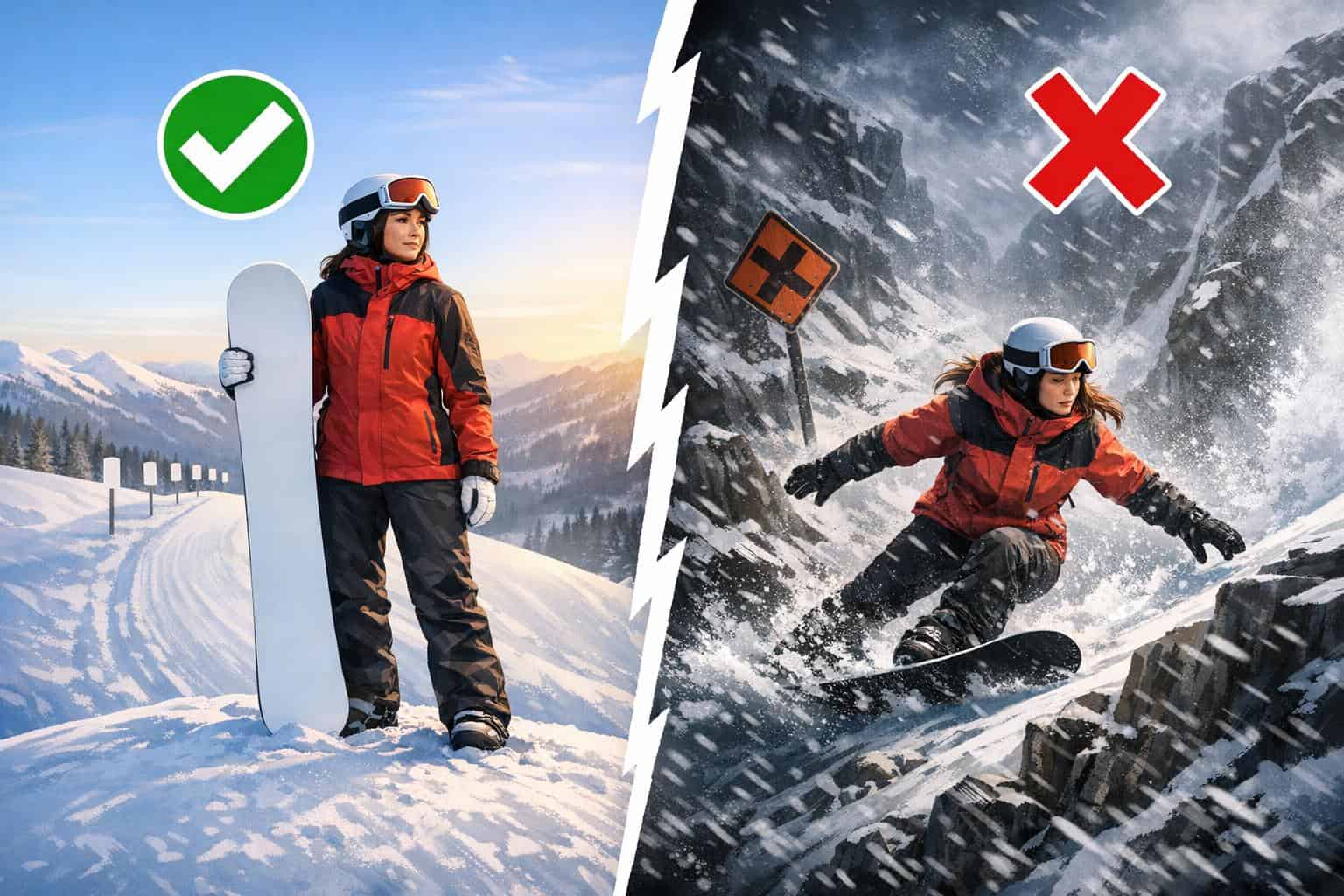
We filtered these boards through five fit-first criteria:
- Rider weight range: Can you actually flex and control the size you choose?
- Forgiving flex: Softer flex helps newer riders initiate turns and recover from small mistakes.
- Beginner-friendly profile: Rocker, flat, and hybrid profiles usually feel less punishing than full camber for brand-new riders.
- Women-specific sizing and waist width: The board should match your stance and boot leverage, not just your height.
- Value for your stage: A bargain is only a bargain if the board fits and helps you learn.
For a true beginner, soft flex is like power steering. It does not do the driving for you, but it makes the inputs less exhausting. Once you can link turns, you may start caring more about edge hold, stability, and how much progression room the board leaves. Advanced riders often choose more camber or stiffness on purpose because they want precision at speed, but that same precision can feel harsh when you are still learning.
One scenario: a nervous rider who only has two mountain days this season should prioritize soft flex and easy turn initiation. A season-pass rider with a sports background may accept a slightly less forgiving profile because she wants more room to grow. Neither choice is morally better. The right board is the one that matches the job.
Every board here is a women's model and is rated or described as beginner-friendly by its brand or a major retailer. Specs come from brand and retailer listings, and you can read more about our broader gear evaluation approach on the How We Test page.

Side-by-Side: Flex, Profile and Sizes
This table is the dressing-room mirror. It helps you see what might fit before you emotionally commit to the graphic, the brand, or the sale tag.
| Board | Best for | Flex | Profile | Shape | Sizes (cm) | Price position |
|---|---|---|---|---|---|---|
| Salomon Lotus | true first-timers, lighter riders | 1 of 5, soft | Flat Out Camber | directional twin | 135, 138, 142, 146, 151, 155 | most affordable here, especially previous-season |
| Rossignol Soulside | easy turn initiation | 3 of 10, soft | AmpTek Auto-Turn, 70% rocker / 30% camber | directional | 141, 145, 149, 153 | mid-budget, often discounted |
| Burton Hideaway | confidence from a trusted brand | Twin Flex, soft, no number published | Flat Top | directional, 5 mm taper | 140, 144, 148, 152, 155 | higher end at full price, often discounted |
| Arbor Swoon Decon | relaxed, forgiving board to grow with | 4-5 of 10, soft | System Rocker | directional twin | 140, 144, 148, 152 | budget-friendly when discounted |
| K2 Dreamsicle | one easy board for groomers and soft snow | mellow | directional rocker | directional | 138, 142, 146, 149, 153 | budget-friendly; package option |
| Nitro Lectra Leaf | progressing fast, smaller boots | 4 of 10, soft | Cam-Out Camber | directional twin | 138, 142, 146, 149, 152 | mid-range, current model |
Published rider-weight examples are only available for some sizes: Lotus 135 cm fits 66-110 lb riders; Lotus 138 and 142 cm fit 77-132 lb riders; Hideaway 140 cm fits 80-120 lb riders. Always check the size chart on the retailer page for your weight before buying.
What most people get wrong is treating beginner as one single category. A two-weekend rider who is scared of edge catches and a season-pass rider who wants to progress fast may both be beginners, but they should not automatically buy the same board. The table is not here to crown one universal winner. It is here to eliminate bad fits fast.
Salomon Lotus: Best for True First-Timers and Lighter Riders
The Salomon Lotus is the board I would point many nervous first-timers toward first because its specs are built around forgiveness. It is a women's board with a 1 of 5 soft flex, Salomon Flat Out Camber profile, directional twin shape, Bite Free Edges, and sizes 135, 138, 142, 146, 151, and 155 cm. The 135 cm size fits 66-110 lb riders, while the 138 and 142 cm sizes fit 77-132 lb riders. The 135 cm waist is 233 mm.
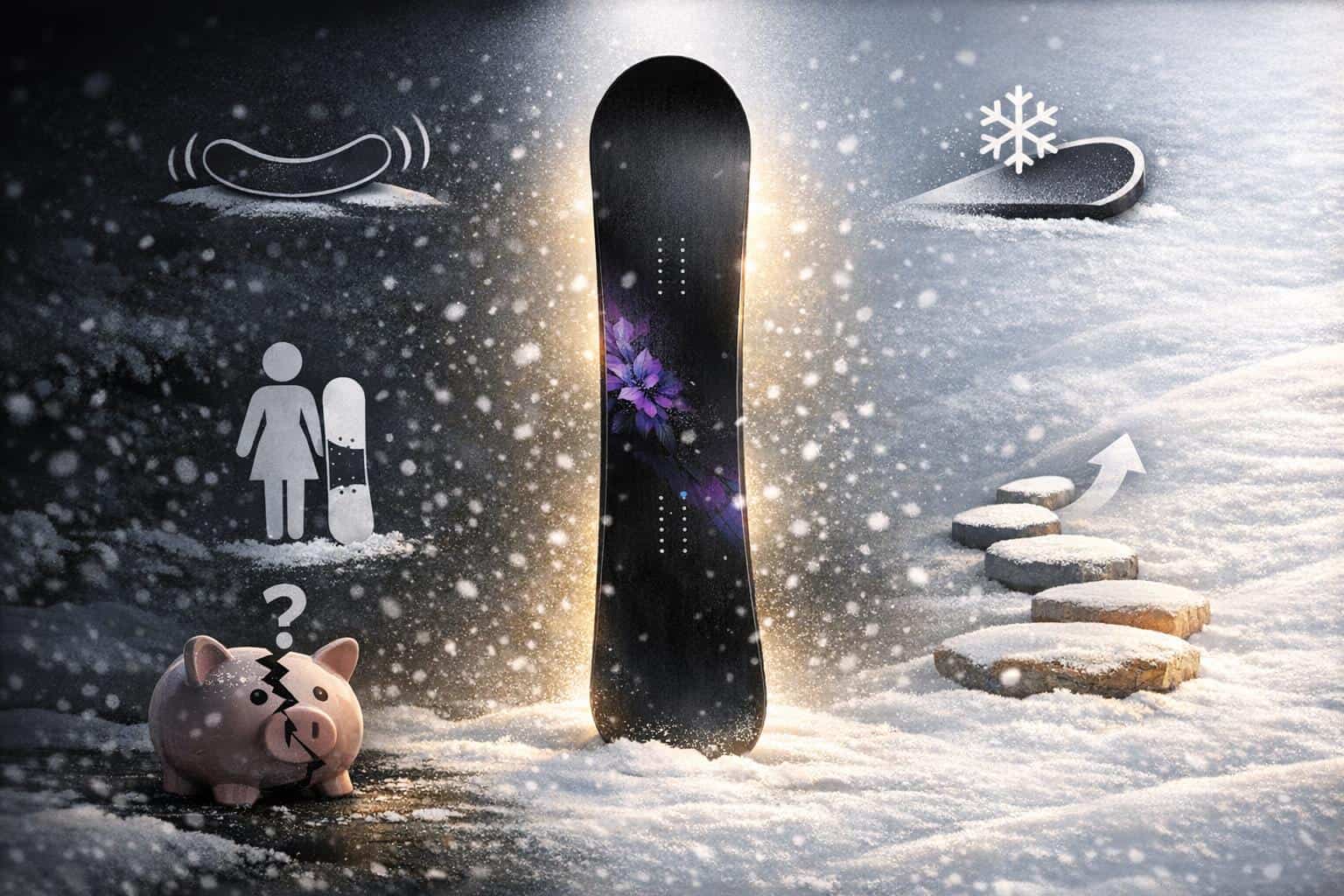
On snow, that soft flex should feel less demanding when you are trying to start turns at low speed. The Bite Free Edges are part of why evo describes it as quick to forgive mistakes. For a beginner, that can mean less panic when your timing is imperfect.
A practical mini-case: a lighter rider who has only done one lesson keeps getting recommended mid-140s unisex boards because of height. She checks weight range instead, sees that a shorter Lotus may actually match her better, and chooses forgiveness over ego. That is not underbuying. That is buying for the rider who will be on the hill next weekend.
The objection is progression room. If you already carve at speed, a 1 of 5 flex will likely feel too soft. But if your main goal is to learn without feeling punished, the Lotus makes a lot of sense. It is also one of the most affordable boards in this lineup, especially when looking at a previous-season model.
Rossignol Soulside: Easiest Turns and a Complete Package Option
The Rossignol Soulside is the quickest recommendation here for beginners who struggle to link turns or who want board, bindings, and boots handled in one purchase. It is a women's board with a 3 of 10 soft and forgiving flex, an AmpTek Auto-Turn profile with 70% rocker and 30% camber, a directional shape, and a deep progressive sidecut. Sizes are 141, 145, 149, and 153 cm.
Rossignol says the softer flex offers ease of ride and gentle grip. That combination is beginner-friendly because rocker helps make turn initiation feel less grabby, while some camber keeps the board from feeling totally vague.
The package option matters if you are buying before a trip. The Soulside is also sold as a package with K2 Cassette bindings and K2 Belief boots in sizes 5-10. For a newer rider, that can remove one whole layer of compatibility anxiety.
Imagine a rider who rented twice and kept freezing between toe-side and heel-side. She is not trying to charge through chopped snow. She just wants the board to come around without a wrestling match. The Soulside is the kind of pick that fits that job. The main caution is sizing: the shortest size is 141 cm, so very small or very light riders need to check the retailer chart carefully.
It sits mid-budget in this lineup and is often discounted as a previous-season model.
Burton Hideaway: The Beginner Board From the Brand Everyone Knows
The Burton Hideaway is for the beginner who wants a trusted name and a stable, catch-resistant feel. It is a women's board with a Flat Top profile, directional shape, 5 mm taper, Twin Flex, and Biax glass that Burton calls forgiving and great for beginning riders. Burton does not publish a numeric flex rating for this board, but it rates the riding level as Beginner.
Sizes are 140, 144, 148, 152, and 155 cm. The 140 cm size fits 80-120 lb riders and has a 235 mm waist.
The easiest way to understand Flat Top is to think of it like a calm platform under your feet. It is not as loose-feeling as a full rocker board, and it is not as demanding as traditional full camber. For a newer rider who wants stability while learning, that is the appeal.
A realistic buyer here is someone who does not want to gamble on an unknown board before her first season. She is willing to pay more at full price for brand confidence, but she still checks weight range, waist width, and return policy before clicking. That is the right way to buy brand-name gear.
The objection is budget. At full price, the Hideaway sits at the higher end of this lineup, though it is often discounted. If price is the main issue, the Lotus or a discounted Swoon Decon may be easier to justify.
Arbor Swoon Decon: A Relaxed Rocker Board to Grow With
The Arbor Swoon Decon is a good fit for beginners who want forgiveness but do not want the very softest board on the wall. It is a women's board with a 4-5 of 10 soft flex, Arbor System Rocker profile, directional twin shape, and sizes 140, 144, 148, and 152 cm. Skiessentials describes it as a relaxed, maneuverable board riders can grow with.
That phrase matters: grow with. For a true first day, the Lotus is softer. But if you have taken a lesson, can control speed a little, and know you want to keep riding, the Swoon Decon gives you a relaxed rocker feel without feeling like a disposable starter board.
Think of it like buying your first bike after using a rental cruiser. You still want something manageable, but you do not necessarily want the most basic option if you plan to ride every weekend.
The hidden risk is assuming more progression room always means better. If you are anxious, light, and just trying to survive your first few days, do not talk yourself out of the easier board. But if you already know you enjoy snowboarding and want a calmer board that can stay fun past the first season, the Swoon Decon belongs on your shortlist. It is budget-friendly in this lineup when the previous-season model is discounted.
Here is the truth that resets the whole buying process: if your board is too stiff, too wide, too long, or built around the wrong rider weight, you may think you are bad at snowboarding when the setup is quietly working against you. The goal is not to buy the most impressive board. The goal is to buy the board that gives your body and skill level the best chance to learn.
K2 Dreamsicle: One Easy Board for Groomers and Soft Snow
The K2 Dreamsicle is for beginners who want one easy board for groomers, soft snow, and light powder days, or who want a package so the major pieces match. It is a women's board with mellow flex, directional rocker, directional shape, and sizes 138, 142, 146, 149, and 153 cm.
It is also sold as a package with Rossignol Myth bindings and Rossignol Alley Boa boots. For a newer rider, a complete setup can be appealing because you are not separately decoding binding size, boot compatibility, and board choice in three different tabs.
The feel here is more all-mountain and mellow than carve-focused. If you want a camber feel for learning stronger edge engagement, the Dreamsicle is not the most obvious choice. But if your first season is likely groomers with occasional softer snow, its directional rocker and easy personality make sense.
A useful scenario: you are buying for a trip and do not want to show up with mismatched pieces. A package can cost less than buying the pieces separately, but the same rule still applies: check the retailer's size chart, boot sizing, binding compatibility, and return policy. A package is only convenient if it fits.
Nitro Lectra Leaf: For Beginners Who Plan to Progress Fast
The Nitro Lectra Leaf is the sharper pick for athletic beginners or riders with a few lessons who want a bit of camber to progress on. It is a women's board, current 2027 model, with a 4 of 10 soft flex, Cam-Out Camber profile, directional twin shape, and sizes 138, 142, 146, 149, and 152 cm, though size runs vary by retailer. The 138 cm waist is 227 mm, the narrowest in this lineup.
That narrow waist can be helpful for riders with smaller boots because it can make edge-to-edge movement feel quicker. The Cam-Out Camber profile also gives this board a different personality than the most forgiving rocker-heavy options. It may offer more progression appeal, but it is not the first board I would hand to the most nervous rider.
Think of the Lectra Leaf like the slightly more responsive car in the beginner lot. Still manageable, still soft, but it expects you to engage a little more. If you are fit, coordinated, and already linking some turns, that can be exciting. If you are terrified of catching an edge on the bunny slope, start with the Lotus or Soulside.
The objection is simple: should an athletic beginner skip softer gear? Not automatically. Athleticism helps, but snowboarding has its own balance and edge timing. The Lectra Leaf is a smart progression pick, not a badge of toughness. It sits mid-range in this lineup and, as a current model, is rarely discounted.
How to Choose If You're Nervous, Progressing Fast, or Buying Before a Trip
If you are still stuck, stop asking which board is best in general. Ask which board fits your situation.
If you are a nervous true beginner: choose the Salomon Lotus or Rossignol Soulside. Soft flex and easy turn initiation matter more than long-term speed stability.
If you want a trusted brand and stable feel: choose the Burton Hideaway. The appeal is a beginner-rated Burton board with Flat Top stability.
If you want to keep the board for several seasons: compare the Arbor Swoon Decon and Nitro Lectra Leaf. The Swoon Decon leans relaxed and rocker-friendly. The Lectra Leaf adds a bit of camber and quicker-waist appeal for smaller boots.
If you want everything in one purchase: look at the Rossignol Soulside or K2 Dreamsicle package options.
If you are buying before a trip: order early enough to confirm size against the retailer's weight chart, check binding compatibility, try on boots if possible, and understand the return policy.
A three-day trip is not the time to experiment with a board that sounds impressive but scares you. One rider with a trip in two weeks might choose the Soulside package to remove compatibility stress. Another who already took lessons might choose the Lectra Leaf because she wants to keep progressing after the trip. Both are smart if they match the rider.
Still torn between the easiest short list? The comparison page for Salomon Lotus vs Rossignol Soulside vs Burton Hideaway can help you separate the three most common beginner decisions.
Beginner Snowboard Buying Mistakes to Avoid
Beginner boards are not low-quality by definition. A forgiving board is not a downgrade. It is a tool for the phase you are in.
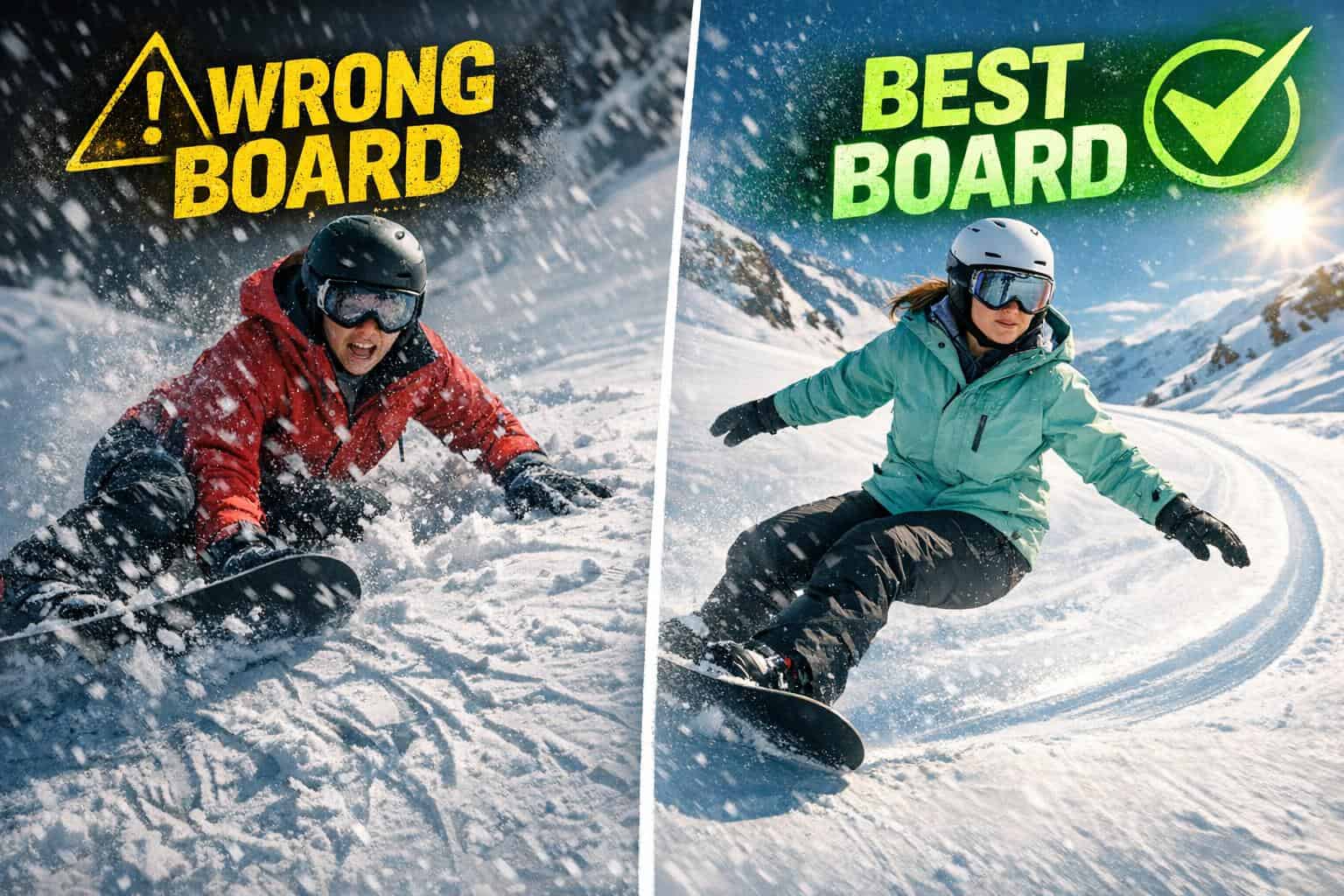
Avoid these common traps:
- Choosing by graphics before size and rider weight. The prettiest board still has to fit your body.
- Buying too stiff because it sounds more advanced. Stiffness can add stability later, but it can punish slow-speed learning.
- Treating a sale as a good deal when the board does not fit. Painful boots at half price are still painful boots. Same with boards.
- Ignoring stance width and waist width. If your boots and stance do not work with the board, turns can feel clumsy.
- Confusing forgiving with flimsy. A soft beginner board can be the correct tool, not a lesser one.
Here is a common story: a buyer grabs a discounted board because it seems too good to pass up. It is a little long, a little stiff, and made for a rider who weighs more. She saves up front, then spends the trip fighting turns and blaming herself. The wiser move would have been choosing the board that matched her weight and comfort level, even if it looked less dramatic on paper.
If you want to go deeper before choosing, read the full reviews for the Salomon Lotus, Rossignol Soulside, Burton Hideaway, Arbor Swoon Decon, K2 Dreamsicle, and Nitro Lectra Leaf before you buy.
Final Recommendation: Choose the Board That Lets You Learn
The right first snowboard is forgiving, correctly sized for your weight, and confidence-building. That sounds less flashy than buying the most aggressive board you can afford, but it is usually the smarter path.
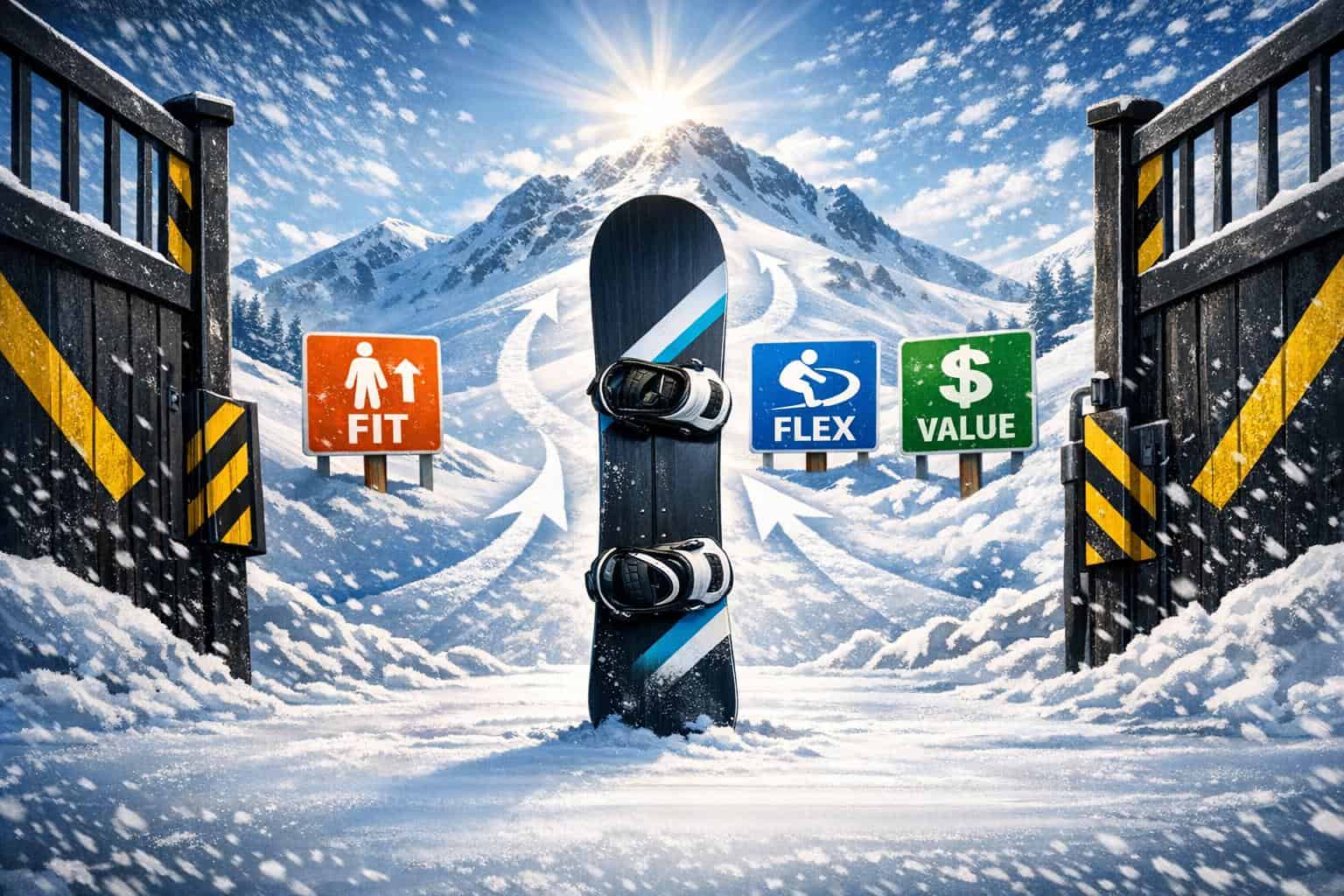
For most true first-timers, my first recommendation is the Salomon Lotus because it is the softest board here, has beginner-friendly forgiveness, and is one of the most affordable options in the lineup, especially as a previous-season model. If you want easy turns or a full package, the Rossignol Soulside is the runner-up to check next.
If you are progressing fast, compare the Nitro Lectra Leaf and Arbor Swoon Decon. If you want one easy board or package for groomers and soft snow, check the K2 Dreamsicle. If you want a familiar brand and stable beginner feel, the Burton Hideaway makes sense.
- Choose forgiveness if you are nervous.
- Choose weight-chart fit over height-only advice.
- Choose package convenience only if the pieces fit your size.
- Do not buy a stiff board just to feel advanced.
- Do not treat a discount as a win if the size is wrong.
- Do not copy a friend’s setup unless your weight, boots, and skill level line up.
The final transformation is simple: you stop guessing, stop blaming yourself for gear problems, and choose the board that keeps you coming back for another run.
If you want a little extra help before you commit, grab the free fit guide here: free gear guide.
The Gear Lady evaluates gear using the Ergonomic Matrix — a published framework applied to manufacturer specs, standards ratings, and aggregated owner reports from women who share their measurements. We don’t field-test every product we cover. We earn commission on some links — as an Amazon Associate, The Gear Lady earns from qualifying purchases — and it never affects a score.
