
Burton Hideaway Review: Is Burton’s Beginner Board Worth It for Women?

Not sure what size board you need? Try our free Women’s Snowboard Size Calculator — your length and width band in under 10 seconds, no sign-up.
Is the Burton Hideaway the confidence-building first board women hope it is?
You are standing somewhere between rental-counter frustration and first-board excitement. The rentals have gotten you down the hill, mostly, but they also left you wondering whether every caught edge was your fault or whether the board under your feet was working against you. Now you are looking at the Burton Hideaway because Burton feels like the safe name. Familiar. Established. Less risky. But this is exactly where a first snowboard purchase gets stressful. Every product page says beginner-friendly. Every board sounds forgiving. Every graphic looks tempting when you are tired of guessing at the rental shop. This Burton Hideaway review is for the rider who wants the real question answered: is this actually an easier, confidence-building women’s snowboard, or are you paying extra because the logo feels reassuring? Maybe you are picturing a better season already: smoother green runs, less panic during edge changes, more willingness to practice turns instead of bracing for impact. That is the outcome worth buying for. The practical filter is simple: the Hideaway makes the most sense if you value forgiveness, brand trust, and predictable progression more than finding the absolute cheapest board on sale.
Quick verdict: the Burton Hideaway is a strong fit for beginner women who want a forgiving, catch-resistant first board from a trusted brand. Burton lists it for Beginner riding level, and its Flat Top profile, directional shape, 5 mm taper, Twin Flex construction, and forgiving Biax glass language all point toward approachable progression rather than aggressive performance.
Decision shortcut: choose the Hideaway if confidence and consistency matter more than chasing the lowest upfront price. Compare alternatives first if you are on a strict budget, already ride more aggressively, or need a published numeric flex rating before deciding.
Best for:
- Beginner women buying their first snowboard and wanting an easier ride
- Riders learning to link turns on groomers, greens, and mellow blues
- Shoppers who trust Burton and are willing to pay more if the fit is right
- Progressing beginners who want a board that feels patient instead of punishing
- Riders shopping only by the lowest possible price
- Intermediate or advanced riders who want a stiffer, more aggressive board
- Spec-focused buyers who need a numeric flex rating
- Park-heavy riders who want a true twin freestyle-first setup
This review is based on verified product details, not hype: Burton identifies the Hideaway as a women’s 2026 beginner board with Flat Top profile, directional shape, 5 mm taper, Twin Flex, forgiving Biax glass, and sizes from 140 to 155 cm. I am not claiming a fixed price or base type because price changes and available source details conflict on the base description.
If you already feel like the fit is right, check the current deal before overthinking it.
Check Current Price
Still unsure? You may want to compare it against the broader best beginner women’s snowboard guide before you commit.
Quick Verdict: The Burton Hideaway Makes the Most Sense for Confidence-First Beginners
The Hideaway is not trying to be the most technical, aggressive, or hard-charging board in the women’s lineup. That is the point. It is built around the kind of ride many newer snowboarders actually need: stable enough to feel composed, forgiving enough to make small mistakes less dramatic, and approachable enough that you want to take another run instead of calling it early. For a beginner, Flat Top is the spec that matters most in plain English. It suggests a ride personality aimed more at stability and control than twitchy, high-consequence edge changes. The directional shape and 5 mm taper point toward comfortable cruising and turn flow, while Twin Flex means the board is designed to feel balanced from tip to tail. Burton also describes the Biax glass as forgiving, which supports the overall beginner-friendly story. A realistic example: imagine Maya, who rented three different boards in one season. One felt dead, one felt too catchy, and one was sized strangely enough that she blamed herself the whole day. She wants her own board because she is tired of starting every trip with uncertainty. For her, the Hideaway is appealing not because it promises instant skill, but because it removes one variable. Like a patient instructor, it gives her room to make small mistakes while she works on better turns. The main objection is fair: is the Burton name making this board cost more than it is worth? Sometimes brand recognition does add pressure. But value is not only the lowest sticker price. If the Hideaway helps you ride more consistently, feel less intimidated, and avoid the rental-board roulette, the value case gets stronger. At full price, it may sit toward the higher end of beginner options, so a discount can make the decision easier. For a progressing beginner, the tradeoff is worth noticing. A forgiving board can help you build mileage, but it is not meant to replace a more responsive board if your real goal is aggressive carving, high-speed riding, or park-first progression. Think of it like choosing ski-school confidence instead of hiring a race coach. Both can be valid. Only one matches this stage.Who the Burton Hideaway Is Really For
 The Burton Hideaway is really for the rider who wants her first owned board to feel manageable. Not boring. Not babyish. Manageable. There is a big difference. A manageable board lets you focus on stance, balance, speed control, and turn shape instead of constantly reacting to gear that feels too stiff, too catchy, or too unpredictable.
If you mostly ride mellow groomers, green runs, and early blue terrain, the Hideaway’s design intent lines up well with that world. The directional shape can make sense for the rider who mainly wants to cruise forward down the mountain, and the forgiving construction story supports a confidence-first learning path. Burton offers sizes from 140 to 155 cm, which covers a range of rider sizes, but you should still use Burton’s size-specific guidance rather than picking based on height alone. As one example, the 140 cm size has a published rider weight range of 80 to 120 lb, which shows why checking the actual size chart matters.
Here is the rider I would picture: Jess goes five to ten days a season, has started linking turns, and wants to stop renting because she is finally committed to improving. She is not trying to charge through chopped-up afternoon snow or build a park setup. She wants to show up, clip in, and trust that the board will not punish every tiny balance error. For Jess, the Hideaway is like buying a clear trail map before heading out. It does not ride the run for her, but it helps remove confusion.
The common worry is outgrowing it too fast. That can happen if you are already pushing hard into more advanced terrain or you know you want a more powerful ride soon. But many beginners overestimate how quickly they need an aggressive board. The false belief is that a beginner-friendly snowboard will hold you back immediately. In reality, if you are still refining turns, speed control, and confidence on groomers, a forgiving board can give you more quality practice because it encourages repetition instead of survival riding.
For an intermediate-leaning rider, the fit depends less on the label and more on your decision workflow. If your next season is about comfort, consistency, and smoother blues, the Hideaway can still make sense. If your next season is about sharper response, steeper terrain, or a more energetic ride, you may want to compare before buying.
Who Should Skip It and Compare Other Beginner Boards
The Hideaway is easy to recommend to the right rider, but it is not a universal answer. That actually makes the decision easier. A board can be good and still be wrong for your budget, riding goals, or preferred feel. Skip or at least compare the Hideaway if price is your top priority. Burton’s reputation is part of the appeal, but not every beginner needs to pay for the most familiar name. If two beginner boards both fit your size, terrain, and learning style, the cheaper option may be the smarter buy, especially if you are still figuring out how often you will ride. You should also compare if you already know you want a stiffer or more aggressive board. Forgiveness is wonderful when you are building turns, but it usually comes with a tradeoff. The same qualities that make a board feel less punishing can also make it less exciting for riders who want strong response at speed. Park-focused riders may prefer a more freestyle-centered true twin feel, and spec-driven shoppers should know that the verified Hideaway data does not include a numeric flex rating. Picture a college rider named Alina. She has a tight gear budget, borrows outerwear from a friend, and is deciding whether to spend more on the board or save for lift tickets. If the Hideaway is heavily discounted and fits her size, great. If not, she may be happier comparing lower-cost beginner boards so she can actually ride more days. Not every new driver needs the same first car. City comfort and highway performance are different priorities, and snowboards work the same way. The objection here is simple: am I wasting money if there are cheaper beginner boards? Not necessarily. You waste money when you buy a board that does not match the riding you will do. If the Hideaway is the board that gives you confidence and gets you on snow more often, it may be worth the premium. If another board offers a close fit at a better price, comparing is the responsible move. If you are hesitating for price or ride-personality reasons, open the direct comparison before deciding: compare the Burton Hideaway against the Salomon Lotus and Rossignol Soulside.The Specs That Matter for Beginners, Without the Gear-Shop Fog
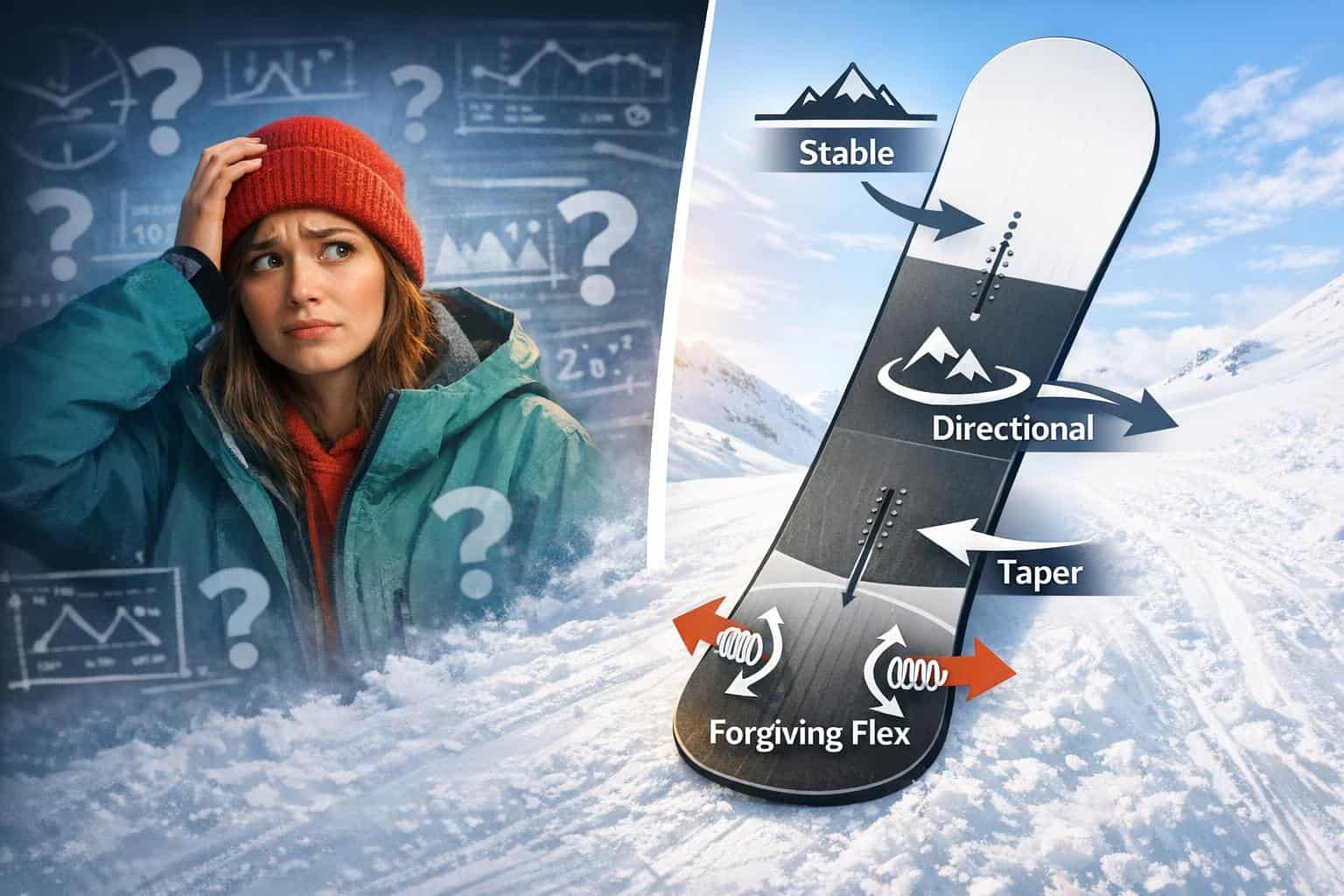 Snowboard specs can sound like a foreign language when you are buying your first board. Profile, taper, flex, glass, shape. It is easy to stare at the list, nod politely, and still have no idea whether the board will help you stop catching edges.
For the Hideaway, the important specs are not there to impress advanced riders. They are there to explain why the board is positioned as approachable.
| Spec | What Burton lists | Why it matters for a beginner |
|---|---|---|
| Riding level | Beginner | The board is explicitly aimed at newer riders, not expert-only performance |
| Profile | Flat Top | A stability-oriented profile that can feel more manageable while learning |
| Shape | Directional | Supports forward-focused cruising and all-mountain groomer progression |
| Taper | 5 mm | Can help the board flow through turns in a directional setup |
| Flex concept | Twin Flex | Designed for a balanced flex feel from tip to tail |
| Glass | Biax, described by Burton as forgiving | Supports the overall easygoing ride intent without needing a numeric flex claim |
| Sizes | 140 to 155 cm | Gives multiple fit options, but you still need the right size for your weight and boot setup |
The question most first-board buyers ask too late
The most important question is not: is the Burton Hideaway a good snowboard in the abstract? The better question is: does it solve the beginner problem you are actually trying to escape? If your problem is unpredictable rentals, edge-catch fear, and feeling punished for small mistakes, then the Hideaway’s confidence-first design story matters. If your problem is that you are already outriding soft beginner gear, then brand trust will not fix the mismatch. Many first-board buyers over-focus on price, graphics, or the familiar logo. Those things matter, but they are not the core decision. The board’s shape, flex story, and ride intent need to match how you ride right now, not the rider you hope to become three seasons from now.How It Should Feel on Snow for a Newer Rider
Based on Burton’s beginner designation and the Hideaway’s specs, the expected ride personality is approachable rather than aggressive. That means the board should be aimed at helping newer riders feel more composed while practicing turns, managing speed, and building confidence on groomed terrain. For a beginner, that can look like fewer panic moments. Not zero falls. Not magic. Just a board that is designed to be less punishing when your balance is a little late or your edge change is not perfectly clean. A forgiving board whispers corrections instead of shouting at you. Imagine Priya, who can ride falling leaf and is starting to link wider turns. On rentals, she never knew whether the board would feel heavy, catchy, or washed out. With a consistent beginner-focused board, she can repeat the same movement patterns run after run. By lunch, she is not suddenly an expert, but she has stopped treating every turn like a test. That consistency is where confidence starts to compound. For a progressing beginner, the Hideaway’s personality may support the move from greens into mellow blues, especially if the rider values comfort over quick, aggressive response. The directional shape and taper support the idea of cruising and flowing through turns. But performance will still vary by rider size, boot fit, binding setup, stance, snow conditions, and skill level. A good board cannot compensate for boots that do not fit, bindings set up poorly, or terrain that is beyond your current comfort zone. The objection is that a forgiving board might make you a lazy rider. I do not buy that. A forgiving board does not replace technique; it creates a better practice environment. Like training wheels that come off through repetition, forgiveness can help you build cleaner habits because you are not constantly riding scared. The advanced tradeoff is worth being honest about. Forgiveness usually does not equal maximum high-speed power, aggressive edge hold, or explosive energy. If that is what you want already, the Hideaway is probably not your final answer. If your goal is to build a calmer foundation, that tradeoff may be exactly right.Pros and Cons: Where the Hideaway Wins and Where It Asks for a Tradeoff
 A good pros and cons list is like packing for a mountain day. You need to know what you are carrying and what you are leaving behind. The Hideaway carries beginner confidence, Burton familiarity, and forgiving design intent. It leaves behind some of the sharper performance appeal that more aggressive riders may want.
Pros
- Trusted Burton name for shoppers who want brand confidence with their first board
- Explicit Beginner riding-level positioning from Burton
- Flat Top profile points toward a more stable, manageable feel
- Directional shape with 5 mm taper supports forward-focused cruising and turn flow
- Twin Flex construction suggests balanced flex from tip to tail
- Biax glass is described by Burton in forgiving terms
- Available size range from 140 to 155 cm gives multiple fit options for women riders
Cons
- May sit toward the higher end of beginner-board pricing at full price
- Not the obvious pick for strict budget shoppers
- No verified numeric flex rating for shoppers who compare by spec charts
- Not aimed at aggressive riders who want a stiffer, more responsive board
- Not the cleanest match for park-heavy riders who want a true twin freestyle-first feel
Burton Hideaway vs Similar Beginner Women’s Boards
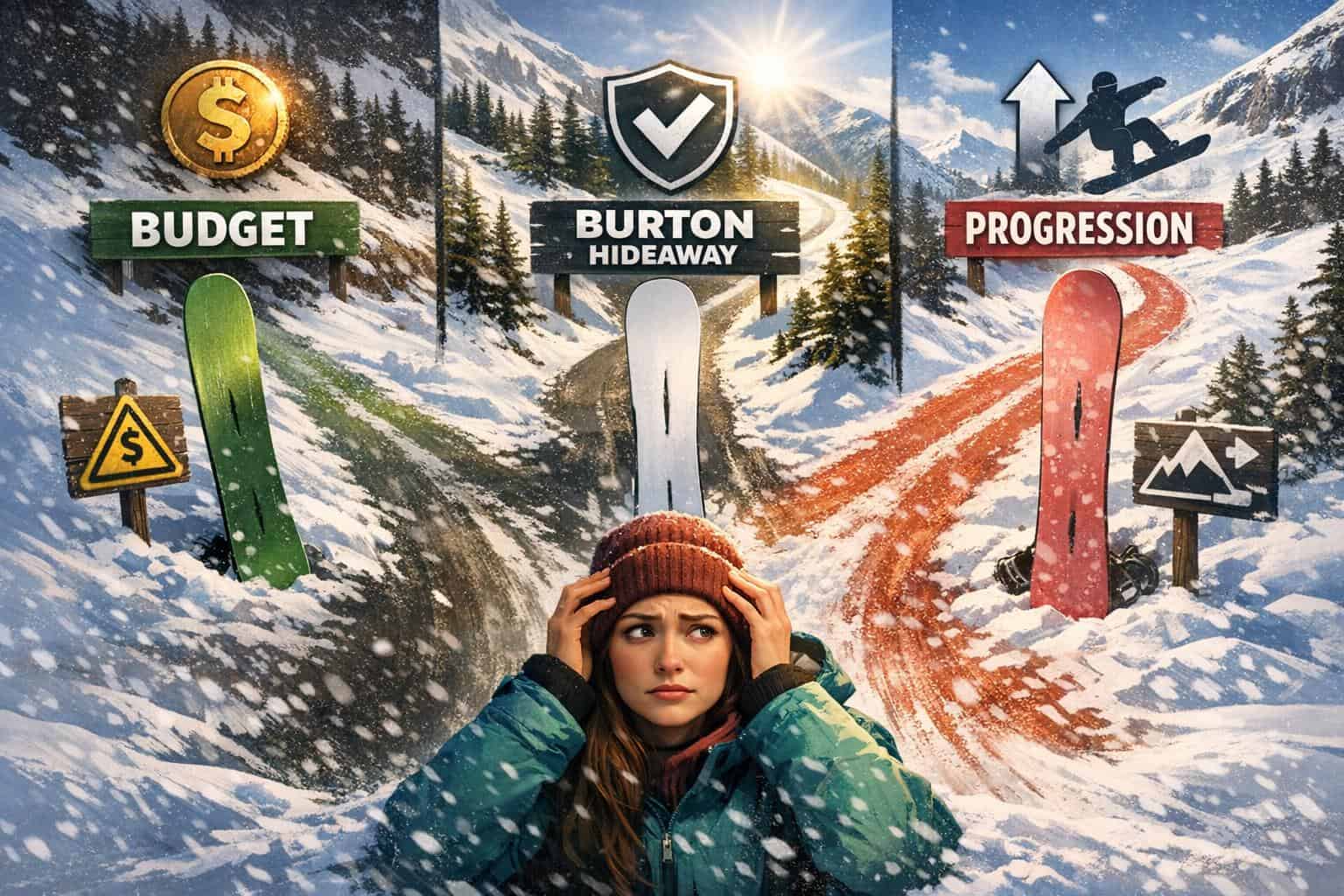 The Burton Hideaway belongs in the same buying conversation as other beginner women’s boards like the Salomon Lotus and Rossignol Soulside. That does not mean one is automatically better for every rider. Three beginner boards can be like three beginner-friendly trails: all approachable, but each has a different feel, pace, and best use.
Use this quick comparison logic before you buy:
| If your priority is… | What to do |
|---|---|
| Brand trust and forgiving progression | Keep the Burton Hideaway high on your shortlist |
| Lowest possible upfront cost | Compare other beginner boards before committing |
| A specific ride personality | Read a side-by-side comparison instead of guessing from product pages |
| Park-heavy riding | Consider whether a more freestyle-centered board makes more sense |
| Smooth groomer progression | The Hideaway’s design intent is a good match to investigate |
Final Recommendation: Buy It If You Want a Forgiving First Board from a Brand You Trust
 Buy the Burton Hideaway if your main goal is a confidence-first beginner board from a brand you already trust. The fit is strongest for women who want forgiveness, a calmer learning experience, and a board designed around approachable progression on groomers, greens, and mellow blues.
Use this three-part decision framework:
- Confidence fit: Do you want a board that feels patient while you practice turns and recover from small mistakes? If yes, the Hideaway fits the brief.
- Terrain fit: Are you mostly riding groomers, green runs, and early blue progression? If yes, its directional, beginner-focused design makes sense.
- Value fit: Are you comfortable paying for Burton trust if the current price works for your budget? If yes, it is worth considering. If no, compare alternatives first.
The Gear Lady evaluates gear using the Ergonomic Matrix — a published framework applied to manufacturer specs, standards ratings, and aggregated owner reports from women who share their measurements. We don’t field-test every product we cover. We earn commission on some links — as an Amazon Associate, The Gear Lady earns from qualifying purchases — and it never affects a score.
