
Salomon Lotus Review: The Softest Beginner Snowboard for Women in 2026

Is the Salomon Lotus Too Soft, or Exactly What Beginner Women Need?
You are standing at the top of a mellow green run, but your shoulders are already tight. The slope is not steep. The chairlift was not scary. The problem is the memory of the last fall: that sudden edge catch, the hard slap into the snow, and the weird question that comes after it: is it me, or is this board making everything harder?
That is the real tension behind this Salomon Lotus review. You are probably not shopping because you want to debate camber profiles for fun. You want a first snowboard that feels less punishing, turns without a fight, and gives you enough confidence to actually practice instead of surviving one run and calling it a day.
The Salomon Lotus exists for that stage. Not the charging-fast stage. Not the expert-carving stage. The early stage, when a softer board can feel like the difference between learning and dreading the next toe-side turn.
Best for:
- True first-time snowboarders who want a soft, forgiving board
- Lighter riders who need smaller sizes and lower rider-weight ranges
- Women who are nervous about catching edges while learning turns
- Budget-conscious buyers comparing previous-season clearance options
Not ideal for:
- Intermediate riders who already ride fast and want more support
- Women who want a stiffer board for carving, jumps, or aggressive terrain
- Heavier riders who may overpower a very soft flex
- Anyone looking for one board to carry them into advanced all-mountain riding
If the Lotus already sounds like the right lane, you can check current availability here:
Still comparing? Start with the broader guide to the best beginner women's snowboards before you commit.
Quick Verdict: The Lotus Is Built for Forgiveness, Not Aggression
The Salomon Lotus is not impressive because it is powerful. It is impressive because it is intentionally un-intimidating.
That matters, because most snowboard reviews reward the wrong things for a true beginner. Speed. Pop. Edge hold. Aggressive response. Those are great if you already know how to pressure an edge and recover from mistakes. But if you are still learning linked turns, a board that bends easily and does not punish every twitch can be more useful than one with a higher performance ceiling.
Think of the Lotus like a gentle driving instructor car. It is easier to steer, easier to correct, and less dramatic when your inputs are not perfect. It is not the car you choose for racing, and that is exactly the point.
A realistic example: imagine a first-season rider on day four. She can side-slip, stop, and sometimes link turns, but her heel edge still catches when she gets tense. On a stiffer rental or hand-me-down board, every correction feels delayed and heavy. The Lotus makes sense for her because the priority is not carving power yet. It is repetition. She needs a board that lets her try again without feeling like every small mistake turns into a crash.
The common objection is fair: is a very soft board just a cheap board? Not automatically. Softness is not the same as low quality. Here, it is a design choice. The tradeoff is that the same softness that helps at low speed can feel limiting once you start riding faster, carving harder, or pushing through choppy snow with confidence.
Use this simple filter:
| If your top priority is… | The Lotus makes sense? | Why |
|---|---|---|
| Easier turns while learning | Yes | Soft flex is easier to bend and steer |
| Fewer harsh edge catches | Yes | Bite Free Edges are designed for forgiveness |
| High-speed stability | Not really | Very soft boards can feel less supportive |
| Aggressive carving progression | Not ideal | You may want more stiffness and response |
| A budget-friendly first setup | Often, yes | Especially if previous-season models are available |
For product-aware buyers, the shortcut is simple: choose the Lotus if you want the learning curve to feel less like a wall and more like a ramp.
Why Beginner Women Look at the Lotus in the First Place
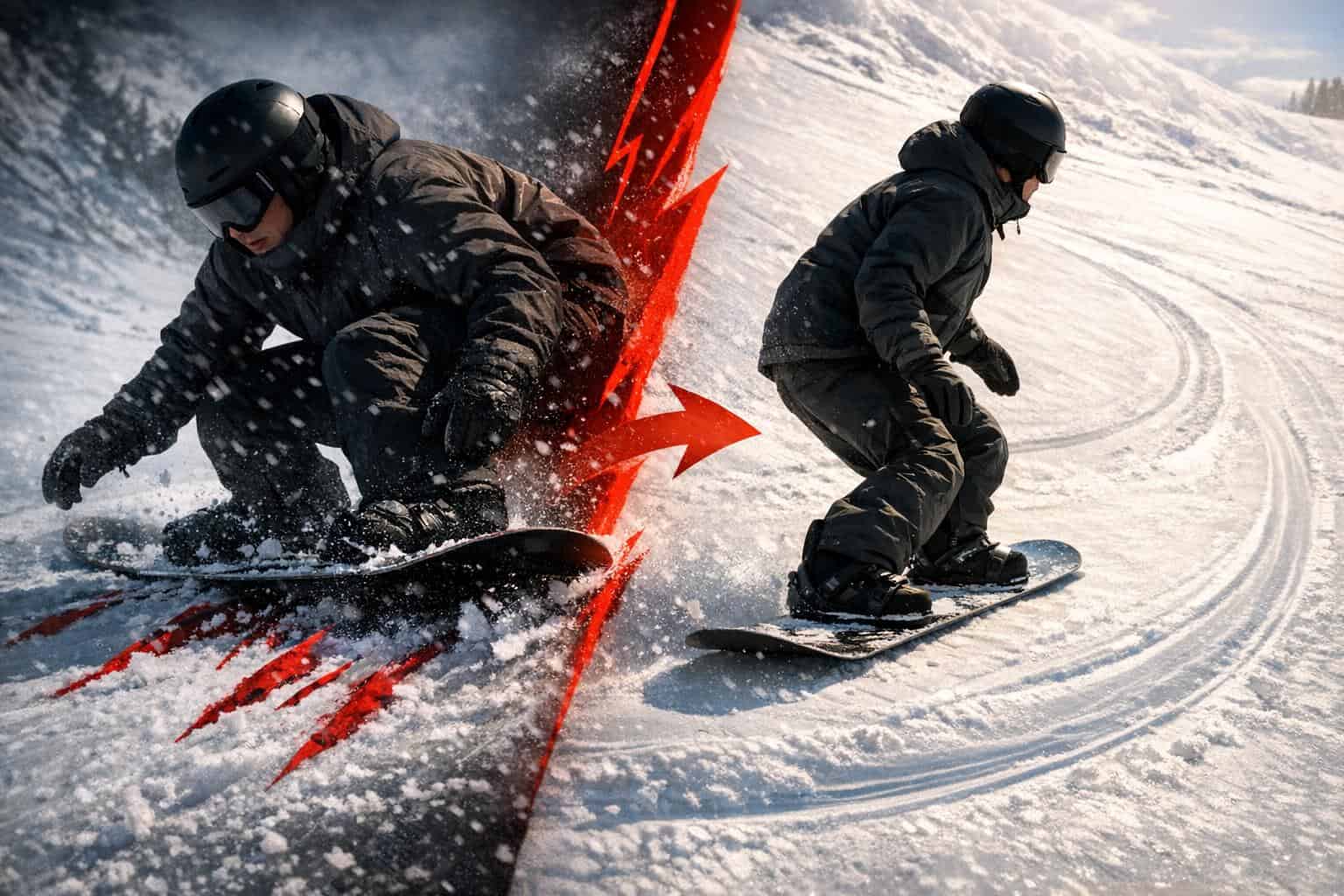
Most beginner snowboard frustration does not start with specs. It starts with a bad run.
Maybe you learned on rental gear that felt different every time. Maybe someone handed you an old board and said, "This should work," even though it was too stiff, too long, or not matched to your weight. Maybe you assumed falling hard was just part of snowboarding, so you blamed yourself instead of asking whether the tool was making learning harder.
Learning on the wrong board is like learning to type on sticky keys. You keep making mistakes, but the feedback is confusing. Are you bad at it, or is the setup fighting you?
For a new rider, the right board should reduce friction. That does not mean it prevents every fall. It means it helps you get more useful practice reps. If a board feels manageable at slow speeds, you are more likely to try another turn, ride another lap, and build real confidence.
Here is a common scenario. A lighter rider spends her first two weekends on whatever rental board is available. One day the board feels okay. The next day it feels grabby and awkward. She starts thinking she just is not athletic enough for snowboarding. Then she compares beginner-focused boards and realizes the issue might be partly fit: flex, length, and forgiveness were never working in her favor. A board like the Lotus does not magically teach technique, but it can make the learning environment less punishing.
The objection here is usually: should a new rider just rent instead of buying? Renting can absolutely make sense for your first day or two. But if you already know you want to ride multiple days this season, owning a consistent beginner board can remove one variable. Instead of adapting to random rental gear, you practice on the same platform each time.
What most people get wrong is thinking a beginner board is only about being cheaper. The better way to look at it is this: a beginner board should help you practice more often with less fear. That is the real value.
The Specs That Actually Matter for First-Season Riders

A snowboard spec sheet can look like a foreign language when you are new. Flex numbers, camber profiles, edge tech, shape names — it is easy to stare at all of it and still not know how the board will feel under your feet.
So here is the beginner translation of the Salomon Lotus specs.
Soft 1 of 5 flex: This is one of the biggest reasons the Lotus is beginner-friendly. A softer board is generally easier to bend, twist, press, and steer at slower speeds. If you are light or still cautious, that can make turn initiation feel less like wrestling.
Salomon Flat Out Camber: Salomon describes the Lotus with its Flat Out Camber profile. In plain English, this is meant to give the board a stable, approachable platform without making it feel overly aggressive. Some retailers may list the spec field as Rocker/Flat/Rocker, but the useful point for a buyer is how the board is positioned: mellow, forgiving, and learning-focused.
Directional twin shape: This means the board is friendly for riding primarily forward while still feeling fairly balanced. For most beginners, that is practical. You are probably not building your whole riding life around switch tricks yet, but you also do not want a shape that feels overly specialized.
Bite Free Edges: This is Salomon's edge-forgiveness feature. It does not mean you can never catch an edge. No board can promise that. It means the edge design is intended to make mistakes less harsh, especially while you are still learning balance and timing.
Specs are ingredients; the ride feel is the recipe. The Lotus combines soft flex, beginner-focused profile design, and forgiving edges to create a board that should feel easier at low to moderate speeds.
Picture a 115 lb beginner who tried a stiffer all-mountain board because a friend said it would last longer. On paper, that sounded smart. On snow, she could barely twist the board from heel to toe, so every turn took too much effort. When she switches her search toward softer boards like the Lotus, the decision changes. She is no longer chasing the board with the most performance. She is choosing the board she can actually control right now.
The false belief to drop: more advanced specs do not automatically make a better first board. A high-ceiling board can slow you down if it demands strength, speed, or precision you have not built yet.
The hidden tradeoff is also real. Beginner-friendly construction usually gives up some dampness, pop, and support when you start pushing harder. That is not a flaw if you buy it for the right stage. It is a problem only if you expect the Lotus to ride like a stiffer, more powerful board.
How the Salomon Lotus Should Feel on Snow

The Salomon Lotus should feel mellow, soft, and easygoing for the rider it is made for. Not dead. Not useless. Just calm.
At beginner speeds, that softness should help with skidded turns, falling-leaf practice, basic stopping, and early linked turns. If you are still figuring out how much pressure to put into your heels and toes, a forgiving board can make those first transitions feel less abrupt.
A good way to imagine it: the Lotus feels more like a soft pencil sketch than permanent ink. Your movements do not have to be perfect immediately. You can adjust, smear, correct, and try again.
For intermediate riders, that same softness becomes the deciding question. Once you ride faster, push harder through turns, or want stronger edge response, you may start wanting more backbone. A very soft board can feel nervous or underpowered when you ask it to hold more pressure.
Consider a rider on day five. She is no longer just side-slipping, but she still overcorrects when moving from heel edge to toe edge. On a stiff board, that overcorrection feels dramatic and scary. On a softer, more forgiving board, she still has to learn good technique, but the consequences may feel calmer. That calmer feedback can be the difference between taking six more runs and quitting after lunch.
The objection: will a forgiving board slow progression? Not if your current barrier is fear, inconsistency, or lack of control. Progression comes from quality repetition. If the Lotus helps you practice more turns with less dread, it can support progression in the stage it was built for. The issue comes later, when you have outgrown its support and want more speed, energy, or precision.
Sizing the Lotus: Where Lighter Riders Should Pay Attention

Sizing is where a lot of first-board confidence falls apart. You read one rule about chin height, another rule about weight, then a size chart with ranges, and suddenly the easy beginner board feels like a math test.
For the Salomon Lotus, available sizes include 135, 138, 142, 146, 151, and 155 cm. Verified retailer examples list the 135 cm for 66 to 110 lb, while the 138 cm and 142 cm are listed for 77 to 132 lb.
The important point: rider weight often matters more than height alone. A board does not know how tall you are when you are turning it. It responds to how much pressure you can put into it. If a board is too long or outside your manageable weight range, it can feel harder to steer, especially at beginner speeds.
Sizing a snowboard is like sizing a bike frame. Close enough might work while you are standing still, but once you are moving, the wrong fit becomes obvious.
Here is a practical example. A 105 lb beginner compares the 135 and 138 cm Lotus. Both might appear possible depending on the chart and her goals, but the shorter option may feel easier to manage if her priority is slow-speed turning and confidence. If she wants a touch more stability and is within range, she might consider the longer size. The right answer depends on weight, boot size, riding style, and comfort goal — not just where the board reaches on her body.
Use this checklist before buying:
- Check the current retailer size chart for the exact model year
- Start with rider weight, not just height
- Consider the shorter option if you are between sizes and want easier maneuverability
- Consider the longer option if you are between sizes and want more stability
- Make sure your boot size works with the board width
- Avoid guessing based only on the old "to the chin" rule
The objection is common: can a beginner just choose a board that reaches her chin? It is a rough visual shortcut, not a real fit system. It might get you in the neighborhood, but weight range and boot fit are safer decision anchors.
If sizing anxiety is the biggest thing holding you back, compare the Lotus against the sizing guidance in the best beginner women's snowboards guide before clicking buy.
Pros and Cons: What You Gain and What You Give Up
The Lotus is easy to understand when you stop asking, "Is this the best snowboard?" and start asking, "Best for what kind of rider?"
Every board gives you a volume knob. The Lotus turns down punishment, but it also turns down aggression. That is the tradeoff.
- Very soft 1 of 5 flex that is easier for many beginners to bend and steer
- Forgiving beginner feel for cautious first-season riders
- Women-specific sizing with small options for lighter riders
- Bite Free Edges designed to reduce harsh edge-catch consequences
- Friendly option for true first-timers who value comfort over power
- Budget-friendly position in the lineup, with previous-season models sometimes attractive when available on clearance
- Limited support for faster, more aggressive riding
- May feel too soft for some athletic or heavier riders
- Less appealing if you want a powerful carver or high-energy progression board
- Not the right pick for riders focused on park performance or advanced all-mountain terrain
- Could be outgrown if you progress quickly and start wanting more stiffness
Imagine two friends buying boards. One is cautious, light, and mainly wants to stop catching edges while learning green runs. She loves the idea of the Lotus because it matches her current riding reality. Her friend is already linking turns confidently after a few weekends, likes speed, and wants to start carving harder. For that second rider, the Lotus may feel too soft too soon. Same board, different outcome.
The objection: does buying a beginner-specific board mean wasting money later? Not necessarily. If it helps you build confidence across your first season, that value is real. The mistake is buying it while secretly expecting it to behave like a stiffer all-mountain board. Buy it for forgiveness, not forever-performance.
Salomon Lotus vs Other Beginner Women's Snowboards

The Lotus makes the most sense when forgiveness and budget are near the top of your list. But it is not the only beginner women's board shoppers compare.
If you are also looking at the Rossignol Soulside or Burton Hideaway, do not treat the choice like a brand popularity contest. Treat it like choosing shoes for the hike you are actually taking, not the mountain you might climb two seasons from now.
Use this framework:
| Rider priority | What to compare |
|---|---|
| Maximum forgiveness now | Look closely at the Lotus |
| More support as you progress | Compare flex and intended riding style |
| Nervous first-season learning | Prioritize soft feel and edge forgiveness |
| Athletic learner who may progress fast | Compare growth ceiling before buying |
| Budget-sensitive setup | Check current availability and previous-season options |
A nervous first-timer may choose the Lotus because she wants the least intimidating path into snowboarding. A more athletic learner might pause and compare it with the Hideaway and Soulside because she expects to ride often, push speed sooner, or want a board with a bit more support. Neither rider is wrong. They are solving different problems.
The objection: should you keep shopping if the Lotus already sounds right? Only if one of the cons sounded like you. If you are truly a beginner and forgiveness is the goal, endless comparison can become avoidance. If you are already riding fast or want a stronger progression board, comparison is smart buyer protection.
If you are stuck between these models, read the dedicated Salomon Lotus vs Rossignol Soulside vs Burton Hideaway comparison before deciding.
Final Recommendation: Should You Buy the Salomon Lotus?

You should consider the Salomon Lotus if you are a true beginner woman who wants a very soft, forgiving snowboard for mellow learning days. Its strongest case is simple: soft flex, beginner-focused forgiveness, lighter-rider sizing, budget-friendly positioning, and Bite Free Edges that are designed to make early mistakes feel less punishing.
You should skip it, or at least compare carefully, if you already ride fast, want aggressive carving response, need more stiffness, or expect one board to carry you deep into advanced all-mountain riding. The Lotus is not trying to be that board.
Think of it as the board you choose when you want the learning curve to feel less like a wall and more like a ramp.
A very realistic buyer is planning five to ten resort days this season. She wants to stop relying on random rentals, she is still nervous about catching edges, and she wants a board she will not dread strapping into. For her, the Lotus makes a lot of sense. If she outgrows it later, that does not mean it failed. It means it did its job: it helped her become the kind of rider who knows what she wants next.
The final objection is usually: what if I outgrow it? You might. But outgrowing a beginner board because you rode enough to improve is not the worst outcome. Buying too much board too early and quitting because every lap feels punishing is worse.
If the fit sounds right, check current availability and price here:
If you are still unsure, compare more options in the best beginner women's snowboards roundup or use the Lotus vs Soulside vs Hideaway comparison to pressure-test your decision.
The transformation you are really buying is not a perfect first day. It is a calmer first season: fewer gear doubts, more repeatable practice, and a board that feels like it is helping you learn instead of daring you to fail.
The Gear Lady evaluates gear using the Ergonomic Matrix — a published framework applied to manufacturer specs, standards ratings, and aggregated owner reports from women who share their measurements. We don’t field-test every product we cover. We earn commission on some links — as an Amazon Associate, The Gear Lady earns from qualifying purchases — and it never affects a score.
