
Burton vs Columbia vs The North Face Snowboard Gear for Beginners 2026

Three Familiar Snow Brands. One Beginner Setup That Actually Fits Your Ride.
You have three tabs open, a cart you do not trust, and a gear wall in your head that keeps getting louder. Burton looks like the snowboard-specific choice. Columbia looks practical and easier to justify if this is only one winter trip. The North Face looks premium enough to wear beyond the resort. And somehow, comparing the best snowboarding gear for beginners still feels less like shopping and more like trying not to make an expensive mistake.
You can already picture the bad version of your first day: pants soaking through after repeated falls, a jacket pulling every time you bend to strap in, sleeves fighting your gloves, or bulky layers that keep you warm in the parking lot but stiff on the snow. Maybe you are Maya, booking three beginner lessons and wondering if she should buy real snowboard gear now. Or maybe you are her friend, going on one family ski weekend and trying not to overspend before she knows whether she will ride again.
The goal is not to crown the loudest logo. It is to choose the brand path that lowers your biggest first-day risk: cold, wet, restricted, over-budget, or underprepared.
Decision shortcut: Choose Burton for snowboard-first design, Columbia for practical winter value, and The North Face for premium outdoor versatility that still works on the mountain.
Best for
- Beginner women comparing familiar snow gear brands before a first serious purchase
- Riders who want to avoid stiff, boxy, or unisex-feeling fit compromises
- Budget-conscious shoppers deciding where to spend more and where to save
- Product-aware buyers choosing between snowboard-specific gear and general winter outerwear
Not ideal for
- Advanced riders looking for backcountry-specific technical advice
- Shoppers who already know the exact model, size, and specs they want
- Anyone expecting one universal winner for every body type, climate, and budget
If you already know you want snowboard-first gear, start with current Burton options here: Check Current Price
If you want the deeper snowboard-specific breakdown first, you can also read the full Burton snowboard gear review.
Quick Verdict: Which Brand Should a Beginner Woman Start With?
If your first question is simply, which one is safest for a beginner snowboarder, the cleanest answer is Burton. Not because every Burton item is automatically perfect, but because Burton sits in the snowboard-first lane. For a beginner, that matters. Snowboarding asks your clothes to handle sitting, kneeling, twisting, falling, strapping in, and getting sprayed with snow from angles normal winter clothes may never meet.
Columbia belongs in the practical winter-value lane. It can be a smart choice if you need warm layers for everyday cold weather, a casual resort day, or a once-a-season trip. The tradeoff is that you need to check each piece carefully for snowboard mobility, waterproofing, and coverage.
The North Face belongs in the premium outdoor-versatility lane. If you want outerwear you may also use for travel, hiking, winter errands, and resort days, it can be appealing. The hidden risk is assuming premium outdoor gear is automatically snowboard gear. It is not. Like buying all-purpose winter boots instead of class-specific snowboard boots, the quality may be real, but the use case still has to match.
Burton is best for
- Beginners taking lessons or riding repeatedly this season
- Riders who want snowboard-specific movement and coverage
- Shoppers who would rather buy once with fewer fit compromises
- Women prioritizing mountain use over everyday winter wear
Burton is not ideal for
- One-trip riders who may not snowboard again soon
- Buyers who need a general winter coat first
- Anyone who has not checked sizing, fit notes, and return policies
Example: Maya books six beginner lessons because she wants to actually learn, not just survive one vacation day. She knows she will fall, sit, twist, and practice strapping in over and over. A cute winter coat might keep her warm walking to dinner, but it may pull at the shoulders when she reaches forward or ride up when she sits in snow. For Maya, snowboard-first gear is not an indulgence. It is friction reduction. She is paying for comfort during practice, not for a logo.
Common objection: What if Burton is too serious for a beginner? If you are riding often enough to notice restriction, wetness, or poor coverage, snowboard-specific gear is not too serious. It is simply better matched to the job.
Columbia is best for
- Occasional riders who need winter gear beyond the mountain
- Budget-conscious shoppers building basic warmth affordably
- Casual resort days, family trips, and cold-weather layering
- Beginners who may rent or borrow more technical pieces at first
Columbia is not ideal for
- Frequent snowboard practice in wet or sloppy conditions
- Pieces that restrict a squat, twist, or seated strap-in position
- Pants or jackets that gap, pull, or lack snow-friendly coverage
The North Face is best for
- Beginners who want premium outdoor versatility
- Shoppers who will use winter outerwear for travel and daily life
- Casual to moderate riders who still check snow-sport suitability
- Women who want fewer total winter pieces in the closet
The North Face is not ideal for
- Buyers assuming every premium jacket is snowboard-ready
- Frequent snowboarders who need ride-focused features first
- Anyone skipping the movement, waterproofing, and layering checks
The Real Difference Is Not the Logo. It Is the Riding Situation.

The wrong question is, which brand has the most fans? The better question is, what will your gear be forced to do on your first few snowboard days?
Beginner snowboarders spend a surprising amount of time close to the snow. You sit to strap in. You kneel after a fall. You bend your knees more than you expect. You twist your upper body while your feet stay locked into the board. You may fall on your seat, palms, knees, hips, and elbows before lunch. Gear that feels warm standing in a parking lot can suddenly feel restrictive, damp, or awkward on the slope.
Think of a brand logo as the sign on a restaurant. It tells you what kind of place you walked into, but the ingredients are what you actually feel. In gear, the ingredients are cut, waterproofing, cuff coverage, layering space, seam construction, vents, and how the piece moves with your body.
A practical way to compare Burton, Columbia, and The North Face is the Fit-Risk-Use framework:
- Fit: Does it work for your body and snowboard movement, not just standing upright?
- Risk: What mistake would ruin your day first: cold, wet, stiff, or over-budget?
- Use: Are you riding weekly, taking one trip, or buying winter gear for several settings?
Example: A beginner buys a fashionable winter coat that feels warm at home. On the mountain, every time she sits to strap in, the hem rides up and snow sneaks in at the back. When she reaches for her binding, the shoulders pull. By the second run, she is not thinking about learning heel edge. She is thinking about being damp and irritated. The coat was not bad. It was simply built for a different situation.
Common objection: If it is warm enough for winter, should it not be good enough for snowboarding? Not always. Warmth is only one job. Snowboard gear also has to move, cover, shed snow, and handle repeated contact with wet surfaces.
Burton: Best Fit When You Want Snowboard-First Gear
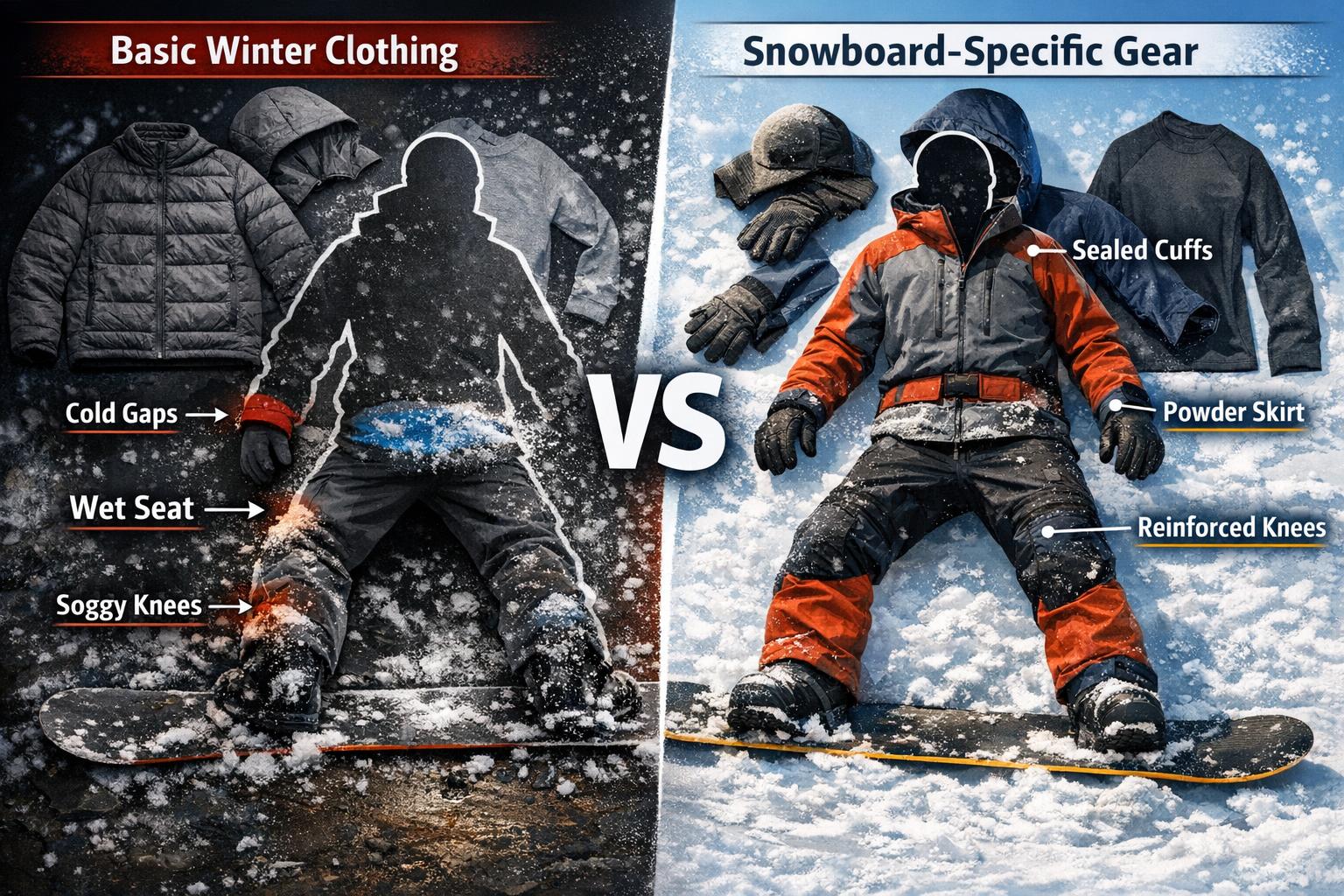
Burton is the most straightforward choice when your purchase is snowboard-first. If you are taking lessons, riding multiple days, or trying to remove as much first-season friction as possible, a snowboard-specific brand gives you a better starting lane than general winter outerwear.
For a beginner, snowboard-first design can matter because the sport asks for range of motion in odd positions. You are not just walking through snow. You are crouching, twisting, falling, pushing up, and sitting down repeatedly. Gear shaped around riding movement can make the day feel less clumsy and less cold.
At the intermediate decision level, the value is not just warmth. It is compatibility: space for layers, cuffs that work with gloves or boots, pants that make sense in a snowboard stance, and outerwear that is less likely to fight you when you bend. At the advanced level, you still need to check the actual item. Brand strength does not replace model-level details like waterproof ratings, ventilation, seam construction, fit notes, and the return policy.
Burton is like buying from the shop that specializes in the sport instead of wandering the general outdoor aisle. That does not mean everything in the shop fits you, but you are starting closer to the problem you need solved.
Example: Nina signs up for weekend group lessons because she wants snowboarding to become a winter hobby. She considers saving money with a general-purpose jacket, but then she remembers she will be on the ground a lot while learning. She chooses snowboard-first outerwear because she wants fewer distractions during practice. Her friend, who is only joining one resort weekend, makes a different choice. Neither is wrong. Their riding frequency changes the smartest buy.
Common objection: Is Burton too expensive or too intense before I know whether I will stick with snowboarding? If you are riding once, maybe. If you are riding repeatedly, discomfort is also expensive. Cold, restricted gear can shorten your day, lower your confidence, and make learning feel harder than it needs to.
For deeper product-aware guidance, read the full Burton snowboard gear review.
Columbia: Best Fit When Budget and Everyday Winter Use Matter More
Columbia can be the smart, grounded choice when your real need is broader than snowboarding. Maybe you need a winter jacket for errands, dog walks, school pickup, travel, and one casual resort day. Maybe your budget is tight and you would rather spend carefully before committing to the sport. That is reasonable.
The key is not to shame the budget decision. The key is to avoid false economy. Saving money only works if the gear still handles the conditions you will actually face. For snowboarding, that means checking whether pants allow a wide stance, whether the jacket covers you when seated, whether the fabric is appropriate for wet snow exposure, and whether your layers can move without bunching.
At a beginner level, Columbia may be enough for occasional riding if the pieces are warm, comfortable, and snow-suitable. At an intermediate level, think about budget allocation: spend more where wet snow and movement matter most, and save where basic warmth is enough. At an advanced level, avoid assuming a familiar winter piece has the fabric, seams, venting, or snow-sport purpose you need. Check the model details.
Columbia can be like a reliable all-weather coat: useful often, practical in real life, and a good value when matched to the right day. But an all-weather coat is not always shaped for the exact movement of snowboarding.
Example: Jess is going on one resort weekend with friends. She does not want to spend like someone riding every Saturday. She chooses value-focused layers she can wear all winter, then rents or borrows the most technical pieces until she knows whether snowboarding will stick. Before buying, she does a squat, reach, twist, and seated test at home. One pair of pants gaps badly at the waist, so she returns them before the trip instead of discovering the problem in wet snow.
Common objection: I want to save money, but I do not want to be miserable on the mountain. Good. That is the right tension. Save on pieces that only need to provide basic warmth, but be more careful with outerwear, gloves, and pants because those take the most snow contact when you are learning.
The North Face: Best Fit When You Want Premium Outdoor Versatility
The North Face makes the most sense for the buyer who wants premium outdoor usefulness beyond a snowboard day. If you travel in winter, hike in cold weather, run errands in storms, or want fewer total pieces in your closet, premium-feeling outdoor outerwear can be appealing.
The caution is simple: premium does not automatically mean snowboard-specific. A jacket can be well-made, warm, and stylish, yet still be awkward for a beginner who spends half the day sitting in snow and bending over bindings. The specific piece has to pass the same snowboard-use checklist: mobility, snow contact, waterproof needs, layering compatibility, and comfort in a riding stance.
At the beginner level, The North Face may feel reassuring because it is familiar and versatile. At the intermediate level, the decision becomes multi-use value versus snowboard-only optimization. At the advanced level, you should compare item-specific snow-sport features against a snowboard-first option like Burton, especially if you plan to ride frequently.
Think of The North Face like a high-quality travel backpack. It can be excellent for many trips, but you still check whether it fits the exact route, weight, weather, and carry style before you trust it for a specific adventure.
- Strong fit for buyers who want winter outerwear beyond snowboarding
- Appealing when travel, errands, hiking, and resort use all matter
- Can reduce closet clutter if the specific item works across settings
- Not every premium outdoor piece is built for snowboard movement
- Frequent riders may want more snowboard-first design priorities
- Model-level checks still matter before buying
Example: Lena travels to cold cities several times each winter and is also trying snowboarding with friends. She wants one premium shell she can use off the mountain, so The North Face makes sense to consider. But she does not stop at the brand name. She checks whether the jacket layers well, lets her bend and twist, and covers her when seated. Then she pairs it with snowboard-appropriate pants because she knows her lower body will take the most snow contact while learning.
Common objection: If it is premium outdoor gear, is it automatically better than a snowboard brand? No. It may be better for your overall winter life, but not automatically better for riding. Better depends on the job.
Side-by-Side: Fit, Warmth, Waterproofing, Mobility, and Value

Use this table like a dressing-room mirror for gear. It does not tell you which logo looks best on the rack. It shows which brand lane fits your real riding situation.
| Buying criterion | Burton | Columbia | The North Face |
|---|---|---|---|
| Snowboard specificity | Strongest fit for snowboard-first buyers | Depends on the specific snow-sport item | Depends on the specific outdoor or snow-sport item |
| Beginner women’s fit | Check size notes, but starts closer to riding needs | Check carefully for movement and coverage | Check carefully; premium cut does not guarantee snowboard fit |
| Warmth | Depends on item and layering system | Often appealing for practical winter warmth | Often appealing for premium outdoor warmth |
| Waterproofing | Check model details, but snowboard use is central to the lane | Must verify for wet snow and falls | Must verify; outdoor does not always mean resort-ready |
| Mobility | Stronger starting lane for stance, bend, and twist | Check squat, reach, and seated movement | Check mobility against layers and riding position |
| Durability for falls | Better aligned with repeated snow contact when item is snowboard-specific | Depends on fabric and snow-sport suitability | Depends on construction and intended use |
| Value | Best value when you ride repeatedly | Best value when everyday winter use matters | Best value when premium multi-use outerwear matters |
| Everyday use | Can work, but may feel more sport-specific | Strong practical crossover potential | Strong premium crossover potential |
| Best buyer type | Beginner riding lessons or multiple days | Occasional rider on a tighter budget | Buyer who wants outdoor versatility and still checks snowboard function |
Here is what most people get wrong: they ask which brand is best before they ask what kind of first season they are buying for.
That question is too broad to be useful. A beginner woman does not need the most famous brand. She needs the option that removes the biggest risk from her first day. If you will take lessons every weekend, snowboard-specific mobility may be worth more than everyday versatility. If you are going on one winter trip, a practical multi-use setup may be smarter. If fit has always been hard for you, the cut and movement test may matter more than price or popularity.
Example: Two friends buy for the same mountain weekend. One has already booked weekly lessons and wants to progress. Burton wins for her because she needs gear that supports repeated practice. The other is joining one trip, spending most of her weekend around the lodge, and needs a jacket for winter errands afterward. Columbia or The North Face may make more sense for her if the pieces pass the snowboard checklist. Same brands, same resort, different correct answer.
Common objection: I just want someone to tell me which one is best. The closest simple answer is this: Burton is best for snowboard-first beginners. But the smarter answer is to match the brand to your risk. Cold, wet, stiff, over-budget, and underused are different problems.
What Beginner Women Should Check Before Buying Any Snowboard Gear
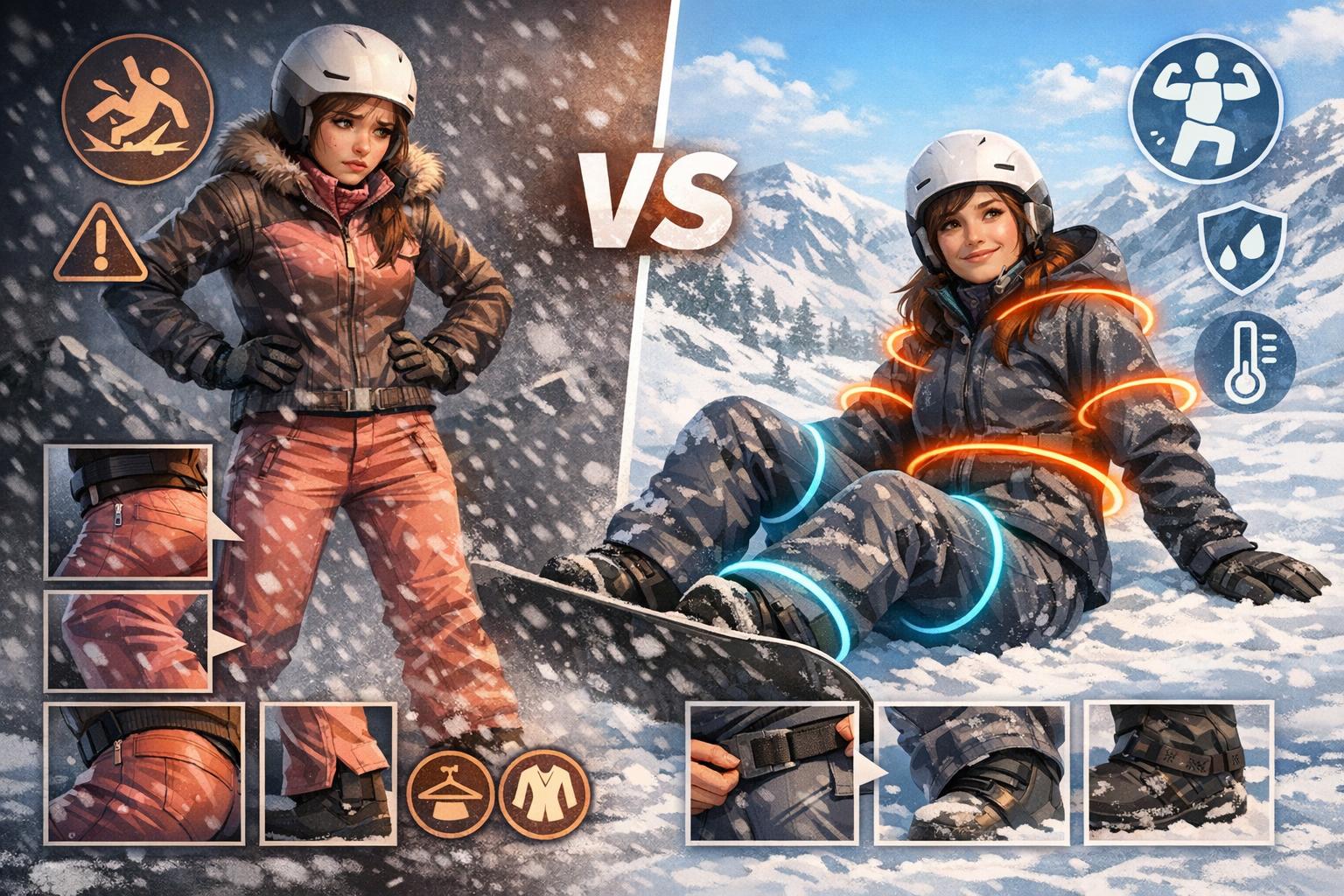
Treat gear buying like a test ride, not a fashion try-on. Standing in front of a mirror tells you almost nothing about what happens when you sit in snow, reach for a binding, or twist your upper body while your feet are fixed.
Before you buy any jacket, pants, gloves, or layers, run the beginner movement test:
- Squat: Can you bend your knees without the pants pulling, pinching, or sliding down?
- Twist: Can your torso rotate without the jacket feeling tight across the shoulders?
- Reach: Can you reach toward your boots without sleeves riding up or the hem exposing your back?
- Sit: Does the waistband gap when you sit like you are strapping in?
- Layer: Can you add a base layer or midlayer without feeling stuffed and stiff?
Then check the practical details most beginners forget:
- Waterproofing and snow protection, because beginners sit and fall more often
- Warmth and layering flexibility, not just the puffiest item on the rack
- Cuffs, hems, waist adjustability, pockets, and glove compatibility
- Whether the piece is women’s-specific, unisex, or simply cut in a way that works for your body
- Return policy and sizing notes before you remove tags
- Where your budget matters most: pants, gloves, and outer layers usually take the most punishment
At a beginner level, these tests prevent obvious misery. At an intermediate level, they help you balance warmth, mobility, and waterproofing for your local climate. At an advanced level, they lead into more technical choices like vents, shell systems, seam construction, and model-specific snow-sport features.
Example: Priya almost keeps a pair of winter pants because they feel warm and look fine standing up. Then she does a seated strap-in test at home. The waistband gaps, the knees pull, and the fabric bunches under her hips. She imagines learning on a wet beginner slope and realizes the pants will annoy her all day. She returns them before the trip and chooses a pair that moves better. The test takes two minutes and saves her first lesson.
Common objection: Trying this hard feels excessive for beginner gear. It only feels excessive until the first time snow gets down your back or your pants fight every binding adjustment. Beginner gear does not need to be the most technical. It does need to let you learn.
How to Choose Without Overbuying Before Your First Season
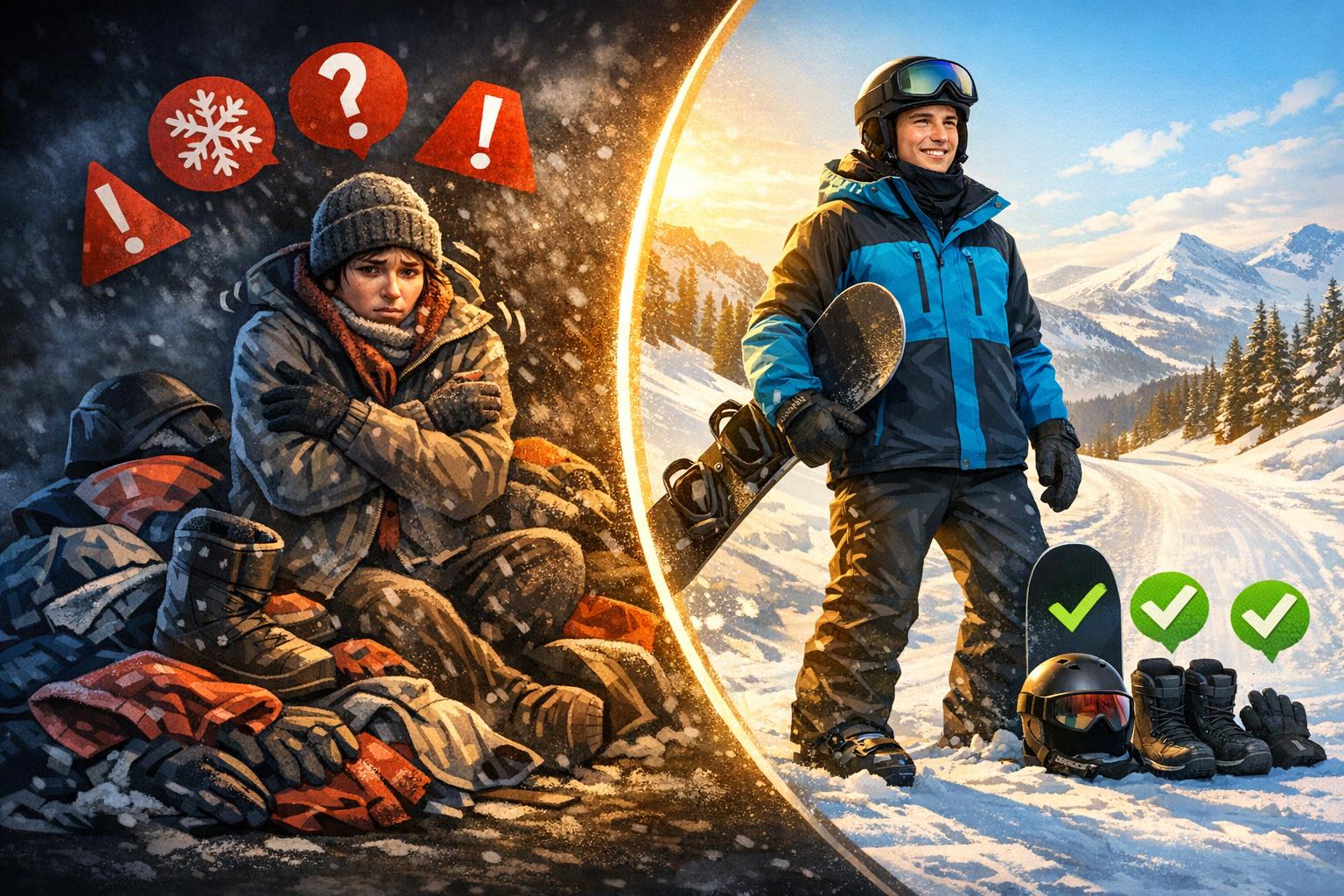
The safest budget-conscious buy is not always the cheapest setup, and it is not always the most premium setup. It is the setup that matches how often you will ride and where discomfort would cost you the most.
Use this simple decision order:
- If you will ride weekly or take multiple lessons: start with Burton or another snowboard-first setup, then compare current item details.
- If you will ride once or twice and need winter gear anyway: Columbia may be practical if mobility and snow protection check out.
- If you want fewer premium winter pieces for travel, errands, and casual resort days: The North Face may be worth considering if the exact piece works for snowboarding.
- If fit is your biggest concern: prioritize the movement test over the brand name.
- If wet snow is likely: prioritize waterproofing, pants, gloves, and coverage before style.
A false belief worth dropping now: beginner gear should be whatever is cheapest because you are new. The truth is more nuanced. Beginners often fall more, sit more, and move less efficiently than experienced riders. That can make the right outer layers more important, not less. You can still save money, but save strategically.
Example: Maya and her occasional-rider friend both worry about choosing wrong. Maya realizes her biggest risk is restricted movement during weekly lessons, so she leans Burton. Her friend realizes her biggest risk is buying expensive snowboard-only gear for one trip, so she chooses a more versatile winter setup and checks the fit carefully. Both avoid panic-buying. Both stop comparing logos and start buying for the actual day they are about to have.
Common objection: What if I choose wrong? Choose from the risk you most want to avoid, keep tags on until the movement test is done, and favor retailers or options with clear sizing and return policies. You do not need perfect certainty. You need a decision that is honest about your first season.
Final Recommendation: Choose the Brand That Reduces Your Biggest First-Day Risk
If you want the cleanest snowboard-first starting point, choose Burton. It is the strongest fit for beginner women comparing established gear brands because the brand lane is built around riding, not just winter weather.
If you are budget-conscious, riding occasionally, and need cold-weather pieces beyond the mountain, Columbia can be a practical choice. Just do not skip the snowboard-use checks. Warm in town does not automatically mean comfortable on snow.
If you want premium outdoor versatility, The North Face can make sense when the exact item supports snowboarding movement, wet-snow exposure, and layering. Treat it as a strong outdoor option, not an automatic snowboard upgrade.
There is no universal winner across every body type, climate, budget, and riding schedule. The right gear is not the loudest recommendation. It is the setup that removes the most friction from your first day.
Before you buy, run one final filter:
- If your biggest fear is being stiff or underprepared, start with Burton.
- If your biggest fear is overspending, compare Columbia through the checklist.
- If your biggest fear is buying gear you will not use off the mountain, consider The North Face carefully.
- If your biggest fear is fit, test the cut before you trust the brand.
For a deeper snowboard-first breakdown, read the Burton snowboard gear review.
If you are ready to compare current snowboard-first options, start here: Check Current Price
The transformation is simple: fewer tabs, fewer doubts, and a beginner setup chosen for the way you will actually ride. Not the most famous logo. Not the cheapest guess. The gear path that helps you feel warmer, drier, freer to move, and more confident when you finally strap in.
The Gear Lady evaluates gear using the Ergonomic Matrix — a published framework applied to manufacturer specs, standards ratings, and aggregated owner reports from women who share their measurements. We don’t field-test every product we cover. We earn commission on some links — as an Amazon Associate, The Gear Lady earns from qualifying purchases — and it never affects a score.