
Snowboard Layering for Women: Build a Warm, Dry Setup
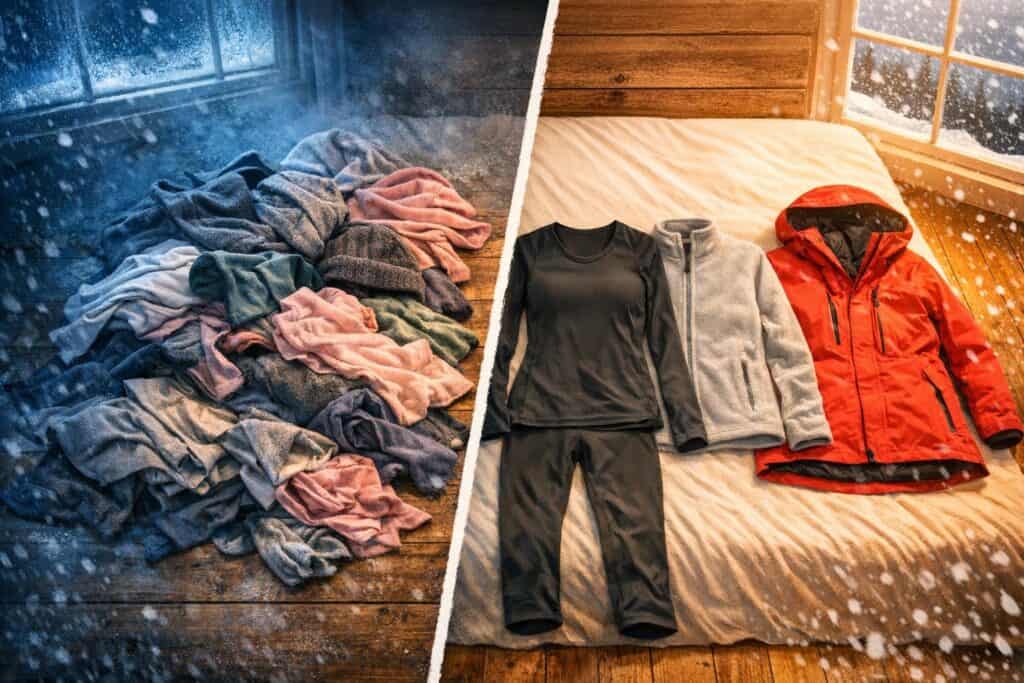
Snowboard layering for women is three jobs done by three layers: a snug base layer that moves sweat off your skin, a mid layer that traps warmth you can add or shed, and a waterproof-breathable shell that keeps weather out without trapping the sweat in. Get those three right and you can ride a cold January lift line and a sweaty March afternoon with the same kit, just in different combinations. Here’s how to build it, what changes with the weather, and where women’s sizing goes wrong.
The three layers, and the job of each
- Base layer (against your skin): merino wool or synthetic, snug, top and bottom. Its job is moisture, not warmth — sweat sitting on skin is how you get cold. Never cotton. Cotton soaks, stays wet, and pulls heat out of you for the rest of the day. This is the single most common beginner layering mistake, and it’s also the cheapest one to fix.
- Mid layer (the adjustable one): a fleece, a light synthetic-insulated jacket, or a wool sweater. This is the layer you change to match the day — thicker for storm days, lighter or left in the bag for spring. A full zip beats a pullover, because venting heat on the lift without undressing is the whole point.
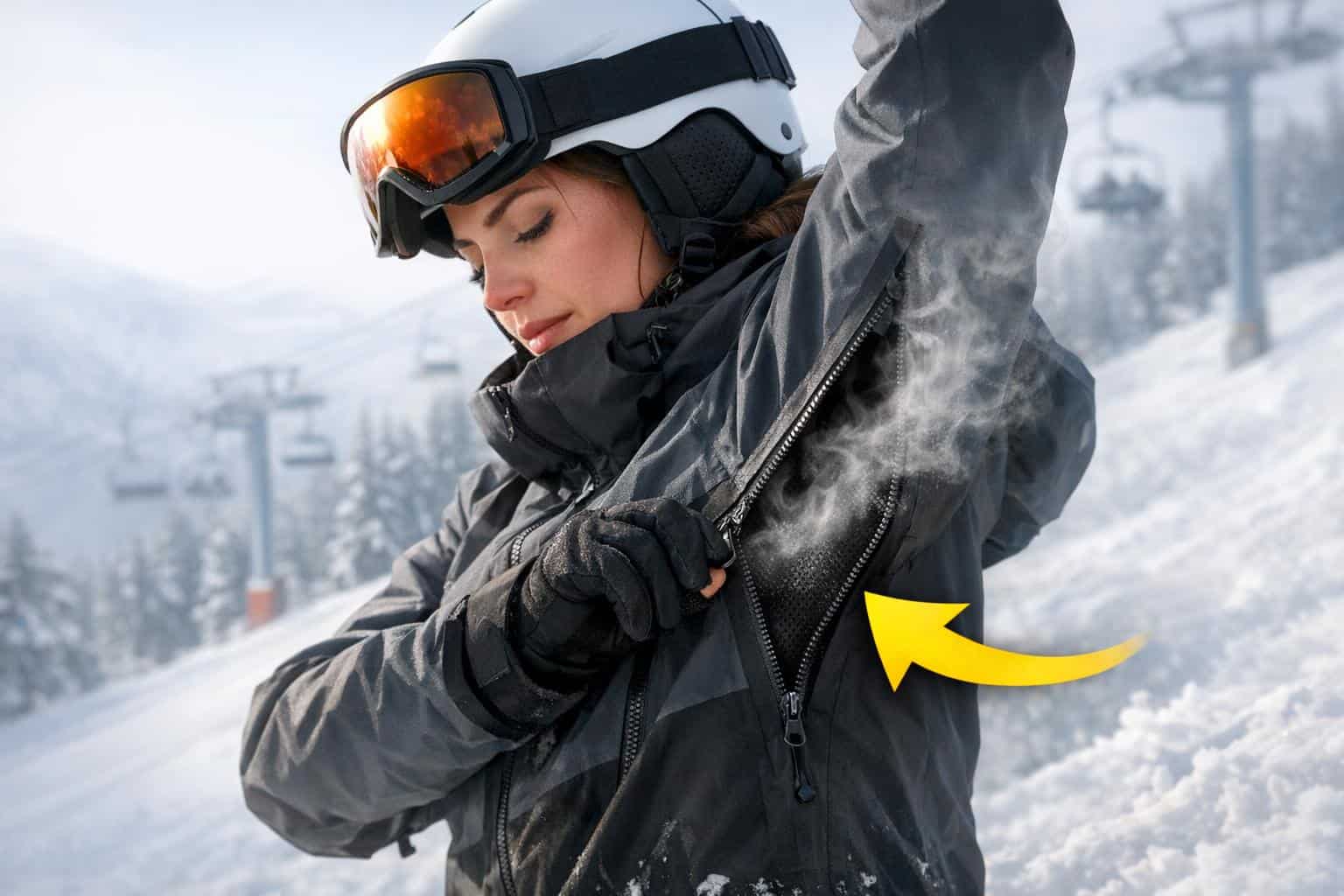
- Shell (jacket and pants): waterproof-breathable, with room to move and to fit the mid layer under it. Snowboard-specific shells earn their keep with pit zips for venting, powder skirts, reinforced seat and knees — you sit in snow more than skiers do — and cuffs that seal over gloves and boots.
Match the stack to the day
| Conditions | Base | Mid | Shell |
|---|---|---|---|
| Deep cold, long lift rides | Midweight merino top and bottom | Insulated jacket or heavy fleece | Jacket and pants, vents closed |
| Typical resort day near freezing | Lightweight base top and bottom | Light fleece, full zip | Jacket and pants, vents as needed |
| Warm spring laps | Lightweight base | None, or carried | Shell with pit zips open |
| Wet snow or rain | Synthetic base (dries faster than merino) | Light synthetic mid | Fully taped shell, hood over helmet |
The pattern: the base layer rarely changes, the mid layer does most of the adjusting, and the shell is about weather, not warmth. If you’re sweating on the way up and freezing on the way down, the fix is usually venting or a lighter mid — not a thicker jacket.
If “women’s” thermals fit you badly, that’s the sizing, not your body. A lot of base and mid layers sold as women’s are a men’s pattern graded smaller: sleeves set for broader shoulders, torsos cut short when sized for the bust, waistbands that sit wrong. A base layer only manages moisture if it touches your skin — gaps and bunching are functional failures, not cosmetic ones. Check the published size chart’s actual measurements against your own instead of trusting the label, and when a brand lists garment measurements, that’s a good sign someone measured a woman.
The pieces that make or break the day
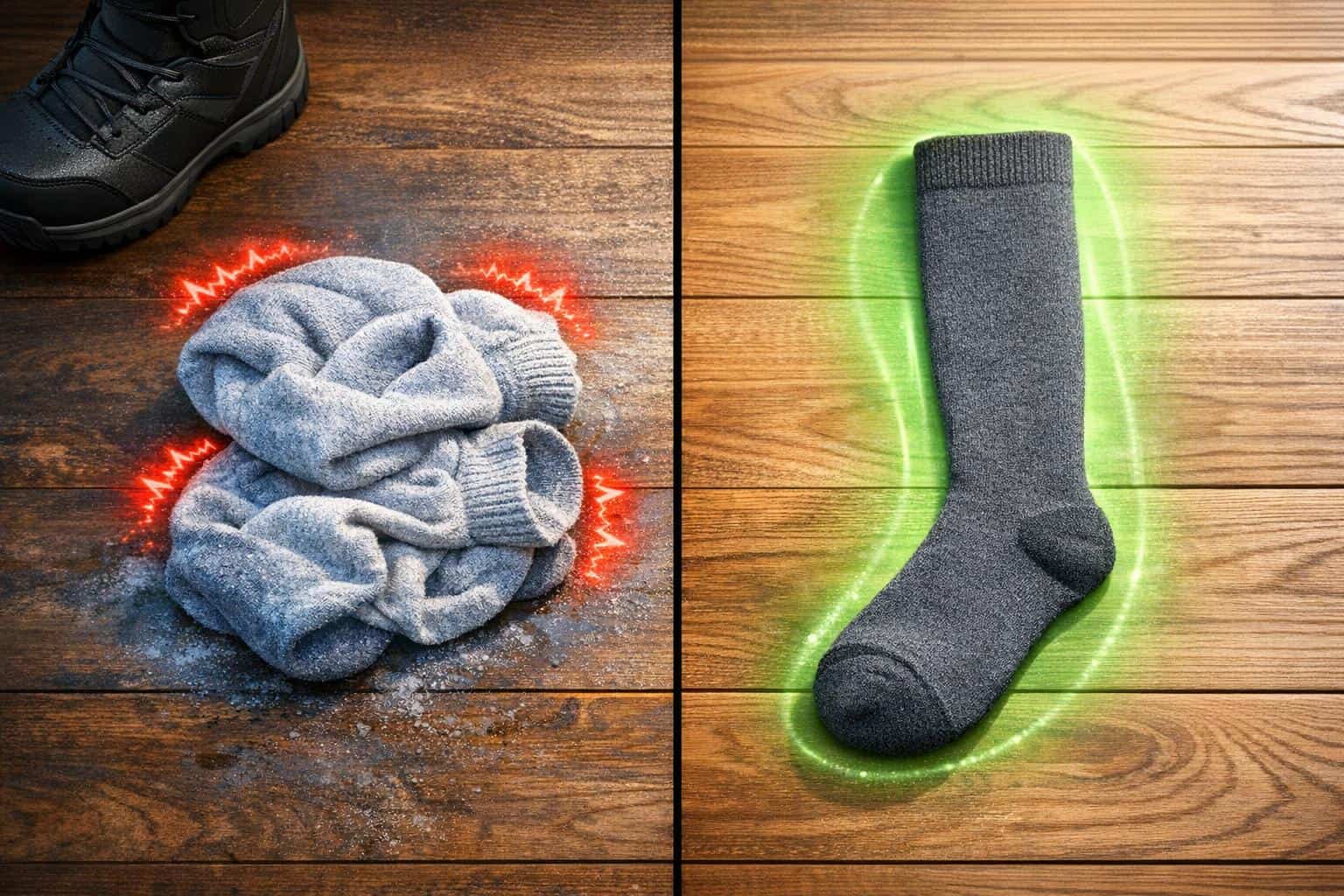
- Socks: one pair, snowboard-specific, merino or synthetic. Not two pairs, not cotton. Doubled socks wrinkle, cut circulation, and make feet colder. If your feet are cold in one good pair, the problem is usually boot fit — run the boot fit checks.
- Gloves or mittens with cuffs that seal. Mittens run warmer, gloves more dexterous. Either way, wet hands are cold hands — a waterproof shell material matters more than thickness.
- Neck gaiter or balaclava in a wicking fabric, worn so your breath escapes rather than funneling up into your goggles — soaking the face fabric and steaming your lens is the classic combo failure (more in the goggle fogging guide).
- Bibs are worth a look. Snow can’t get in at the waist when you sit or fall, and many current women’s bibs have a drop seat so bathroom stops don’t mean full disassembly in a cold stall. Check that feature in the product description before assuming it’s there.
What you can skip for now
Heated gear, specialty insulation pieces, and a second shell are upgrades, not requirements — a correct three-layer stack covers almost every resort day. Heated boots and heated gloves exist, but current models, pricing, and battery claims vary enough that we’d rather you verify a specific product than trust a category promise. Spend first on a real base layer and dry gloves; they move the comfort needle most per dollar. For the full spending order, see the budget beginner gear guide.
Common questions
What do I wear under snowboard pants?
A base layer bottom — merino or synthetic leggings — and nothing else. Jeans and cotton leggings get wet and stay wet. On deep-cold days, add a fleece legging over the base; on warm days, the base alone is right.
Merino or synthetic?
Merino regulates temperature well and resists smelling; synthetic dries faster and usually costs less. Both work. Cotton is the only wrong answer.
Insulated jacket or shell plus mid layer?
An insulated jacket is simpler on consistently cold days; a shell over a separate mid is more flexible across conditions. For one do-everything setup, the shell system wins because you can change the middle.
Build the rest of the kit
- Start the full checklist in the beginner snowboard gear guide
- Compare picks by category in the best women’s beginner gear roundup
Sources
The Gear Lady evaluates gear using the Ergonomic Matrix — a published framework applied to manufacturer specs, standards ratings, and aggregated owner reports from women who share their measurements. We don’t field-test every product we cover. We earn commission on some links — as an Amazon Associate, The Gear Lady earns from qualifying purchases — and it never affects a score.
