
Women’s Snowboard Boot Fit: Sizing, Heel Hold and Pressure Points
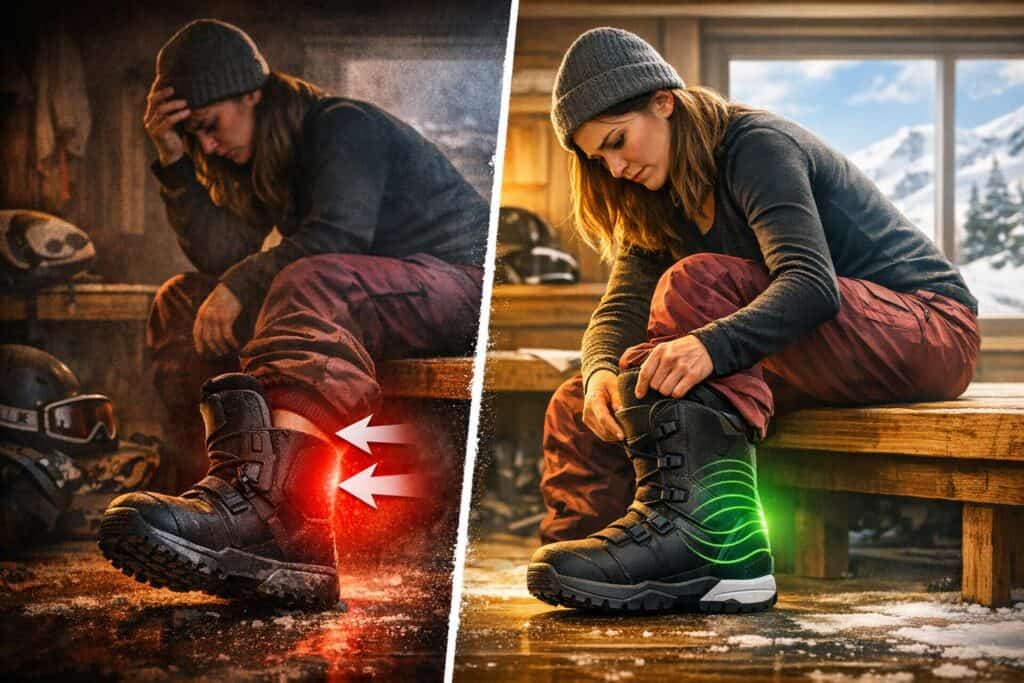
A women’s snowboard boot fits when three things are true: your toes just brush the end of the liner when you stand tall, they pull back off it when you bend your knees, and your heel stays planted when you flex forward. That’s the whole test. Pain, numb toes, and a heel that lifts half an inch every turn are not “part of breaking them in” — they’re a fit problem, and most fit problems are visible in the shop, before you’ve paid. Here’s how to run the checks, what the symptoms mean, and which fixes actually work.
The five-check fit test
Do this with the socks you’ll actually ride in — one pair of snowboard or ski socks, not cotton, not doubled.
- Toe touch, standing tall. Upright, knees straight: your toes should lightly brush the end of the liner. If you can’t feel the end at all, the boot is too big.
- Toe pull-back, knees bent. Drop into a riding stance. Your toes should pull back off the liner. If they’re still jammed, the boot is too small — or the flex is collapsing the toe box.
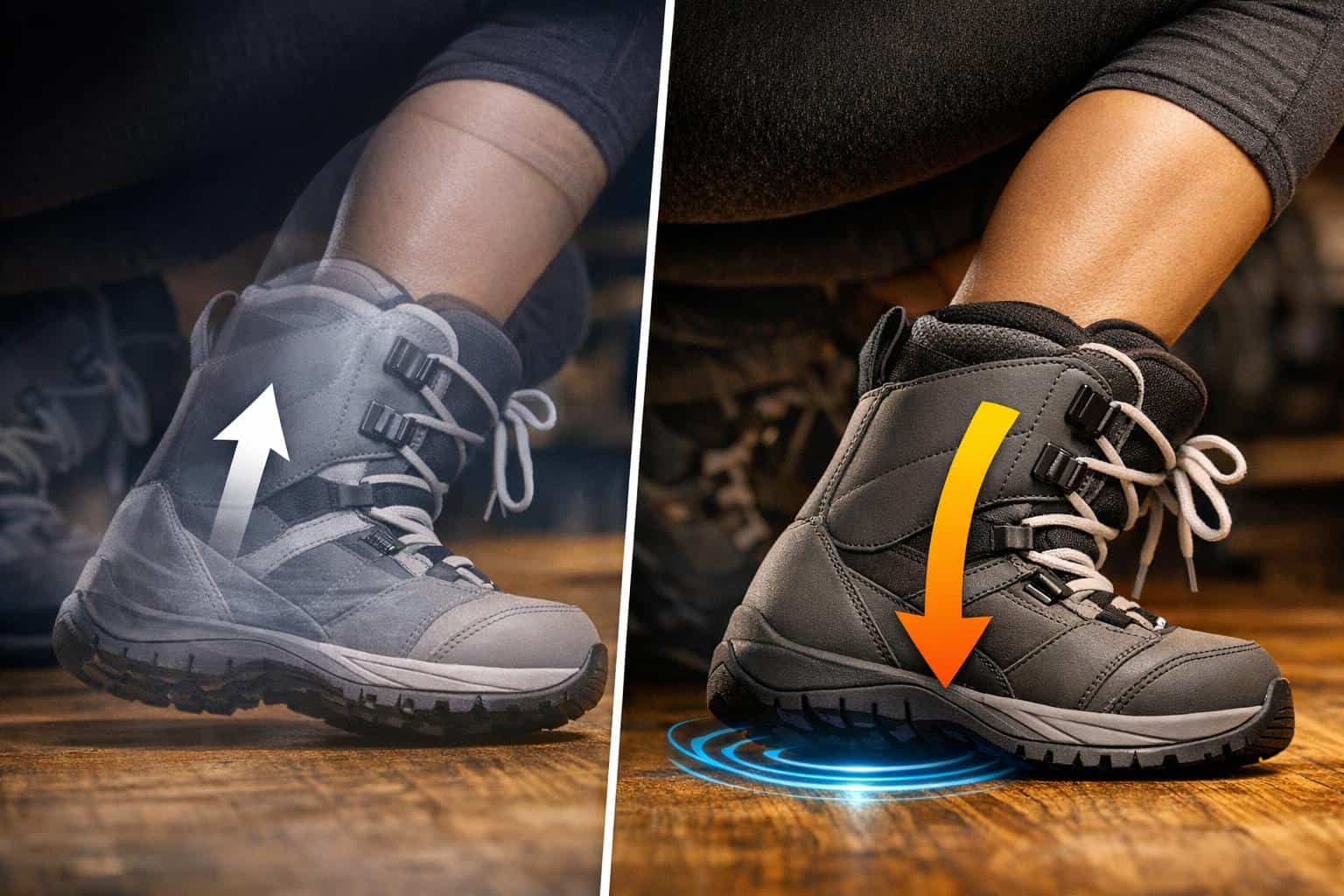
- Heel hold. Laces or BOA snug, flex forward hard. Your heel should stay down. More than a few millimeters of lift means heel-hold trouble, and it only gets worse once the liner compresses.
- Pressure points. Stay in the boots 10–15 minutes. Hot spots on the instep, ankle bones, or the outside of the forefoot don’t fade with time — they turn into day-ruiners at hour three.
- Calf check. The cuff should close around your lower leg without pinching the top of your calf or gaping open. This one is where unisex and men’s boots most often fail women, and it’s a design issue, not a you issue.
If a boot fails these checks, the boot failed — not your feet. A lot of “women’s” boots are a men’s last made smaller, with the colorway swapped. Narrower heels, lower calf muscles, and higher insteps are normal female anatomy, and a boot built on a male template punishes all three. You did nothing wrong by having the body you have. Spot the Cosmetic-tier boot before you pay for it.
What’s actually different in a women-specific boot
When a brand does the engineering instead of the relabeling, three things change — and all three are checkable in the published specs, which is how we score boots on the Ergonomic Matrix:
- Shell and last volume. A genuine women’s last is narrower in the heel pocket and overall lower-volume. If the brand publishes last measurements, compare them to the men’s model — identical numbers mean a relabel.
- Cuff height and calf shape. Women’s calf muscles sit lower on the leg, so a women’s cuff should be cut lower and open wider at the top. This is why a men’s boot that “fits” your foot can still bite your calf all day.
- Liner construction. Liner thickness and insulation drive warmth. Brands rarely publish a thermal spec referenced to women, so treat warmth claims as unverified unless the liner itself is described.
Getting the size right
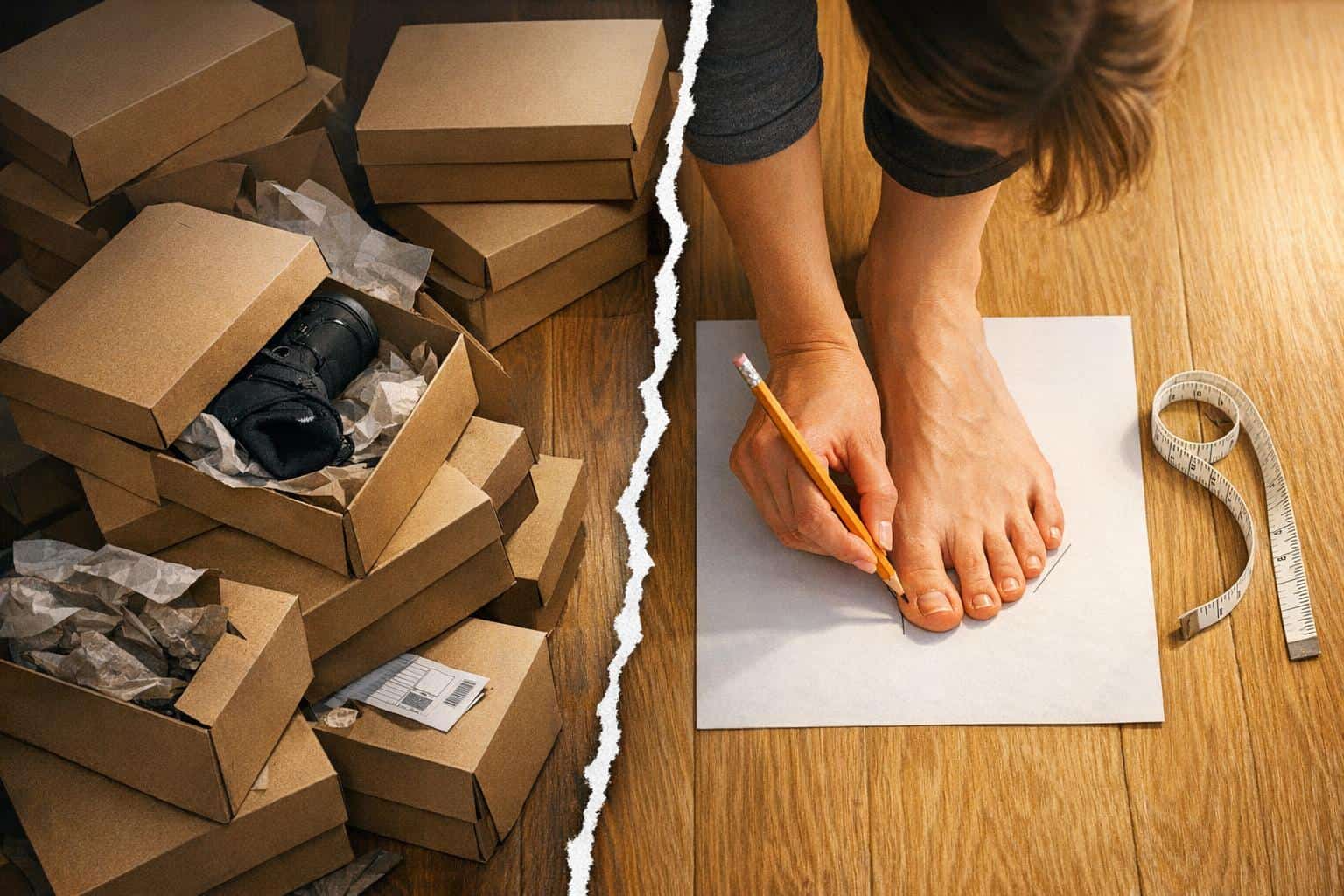
Snowboard boots are built in mondopoint — your foot length in centimeters. Stand on a piece of paper, mark your heel and longest toe, and measure the line in cm. Do both feet and use the longer one. Then use that number against the brand’s own size chart, not your street-shoe size: sizing shifts between brands and even between models from the same brand.
Two rules that feel wrong but are right:
- Buy snug, not comfy. Liners compress as you ride — fitters call it packing out. A boot that feels perfectly cozy on day one usually feels sloppy by mid-season. The one that feels firmly snug (no pain, toes brushing) is the one that fits in three weeks.
- Don’t size up for thick socks. A thicker sock in a bigger boot means more movement, more heel lift, and colder feet — compressed circulation and dead air both work against you. One midweight snowboard sock in the correct shell size is warmer.
Symptom, cause, fix
| Symptom | Most likely cause | Fix that works |
|---|---|---|
| Heel lifts when you flex | Heel pocket too wide, or boot too big | Size/last change first; J-bars or ankle-wrap tightening second |
| Toes numb or jammed all day | Boot too small, or footbed letting the foot slide forward | Re-measure; try a supportive insole before sizing up |
| Top of calf pinched or bruised | Cuff cut too high for your leg | A women-specific model with a lower cuff — lacing looser just adds heel lift |
| Arch cramps mid-run | Flat stock footbed | Aftermarket insole with real arch support |
| Was great, now sloppy | Liner packed out | Insole to take up volume; heat-molded liner refit; next pair starts snugger |
Heat molding and insoles: what they fix, what they can’t
Many liners are heat-moldable: the shop warms them and you stand in them so the foam sets to your foot. It’s genuinely useful for pressure points and small volume mismatches. Burton, for one, recommends having it done by a professional at a shop rather than attempting it at home with an oven — home jobs can cook the foam. What molding can’t do is fix a wrong size or a wrong last. It fine-tunes a boot that’s already close; it doesn’t rescue a boot that’s wrong.
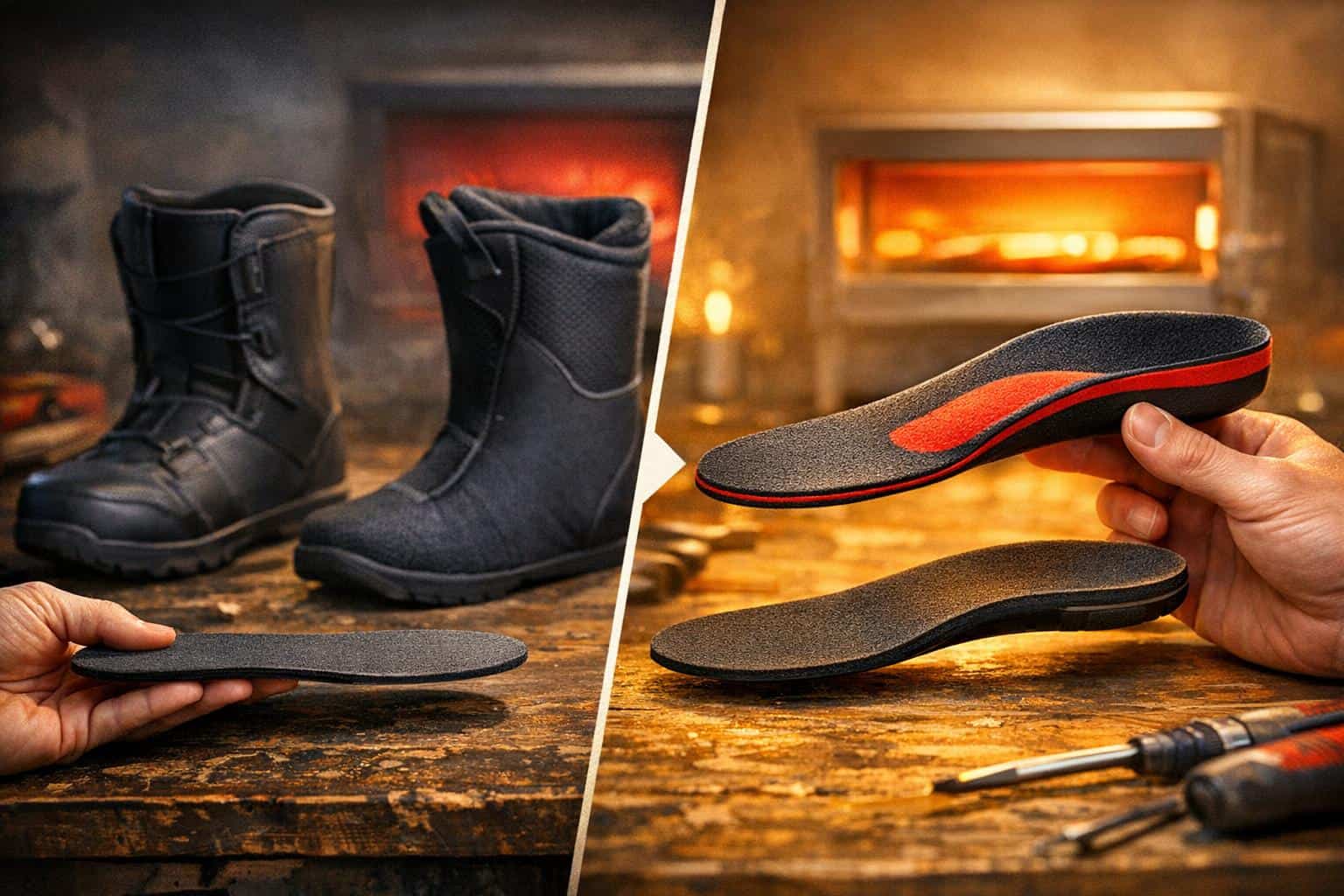
Aftermarket insoles are the most underrated upgrade in snowboarding. Stock footbeds are usually flat foam. A structured insole holds your heel in place, supports the arch, and takes up extra volume in a packed-out boot — often the difference between “fine for two hours” and “fine all day.”
When to pay a boot fitter
If you’ve been through two pairs and both hurt, stop ordering and returning — that loop costs more than a fitting. A boot fitter measures length, width, instep height, and calf, and can punch shells, mold liners, and build footbeds. Worth it especially if your feet are wide, narrow, different sizes, or you’ve concluded your feet are “just difficult.” They’re not. They’ve just never been measured.
Common questions
Should my snowboard boots be the same size as my shoes?
Often close, but don’t trust it. Measure your foot in centimeters and use the brand’s chart. Street-shoe sizing drifts; mondopoint doesn’t.
Can I just wear men’s or unisex boots?
If they pass all five checks on your feet — including the calf check — yes. The problem isn’t the label, it’s the template. Most women fail the heel-hold and calf checks in men’s boots because the last is wider and the cuff is taller. Check, don’t assume, in either direction. And remember your boots have to match your bindings’ size range too.
How tight is too tight?
Pain, numbness, or tingling toes mean too tight (or too small). Snug pressure everywhere with toes brushing the liner is correct. “Comfortable like a sneaker” is too big.
Dial in the rest of your setup
Boots are the piece worth getting right first — they do more for control than any board upgrade. Once they fit:
- Size your board to your body with the women’s snowboard size calculator
- See which boards those boots pair with in the best beginner women’s snowboards roundup
- Build the rest of the kit with the beginner snowboard gear guide and the best women’s snowboard gear picks
Sources
- evo: Snowboard Boot Fit, Flex & Compatibility Guide
- Burton: Snowboard Boot Liners (heat-molding guidance)
The Gear Lady evaluates gear using the Ergonomic Matrix — a published framework applied to manufacturer specs, standards ratings, and aggregated owner reports from women who share their measurements. We don’t field-test every product we cover. We earn commission on some links — as an Amazon Associate, The Gear Lady earns from qualifying purchases — and it never affects a score.
