
Snowboard Goggles Fogging Up? Check Fit, Airflow and Moisture
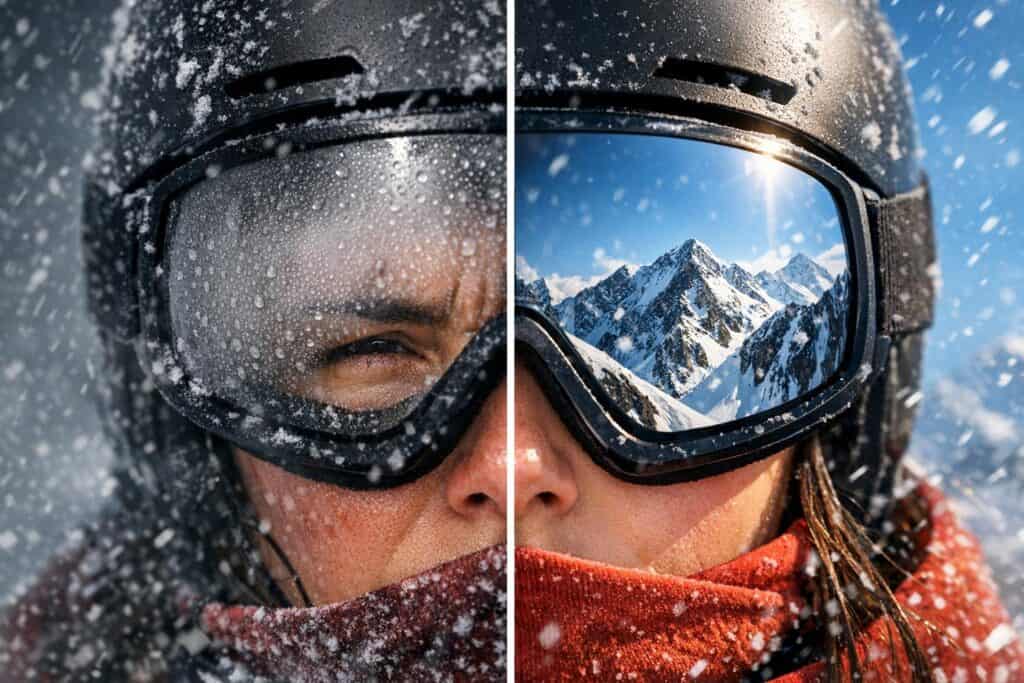
Snowboard goggles fog when warm, damp air — your breath, your sweat, snow melting in the foam — hits the cold lens and condenses. So every real fix does one of three things: keeps moist air out of the goggle, moves air through it, or keeps the lens warm and dry enough that moisture never condenses. Run the checks below in order. Most fogging is a habit problem or a fit problem, and both are free to fix; only the last case means the goggle itself is done.
On the hill: stop the fog you have right now
- Get moving, or get the goggles off your face for a minute. Standing still kills the airflow that vents the frame. Hold the goggles away and let cold dry air cycle through — don’t wipe the inside.
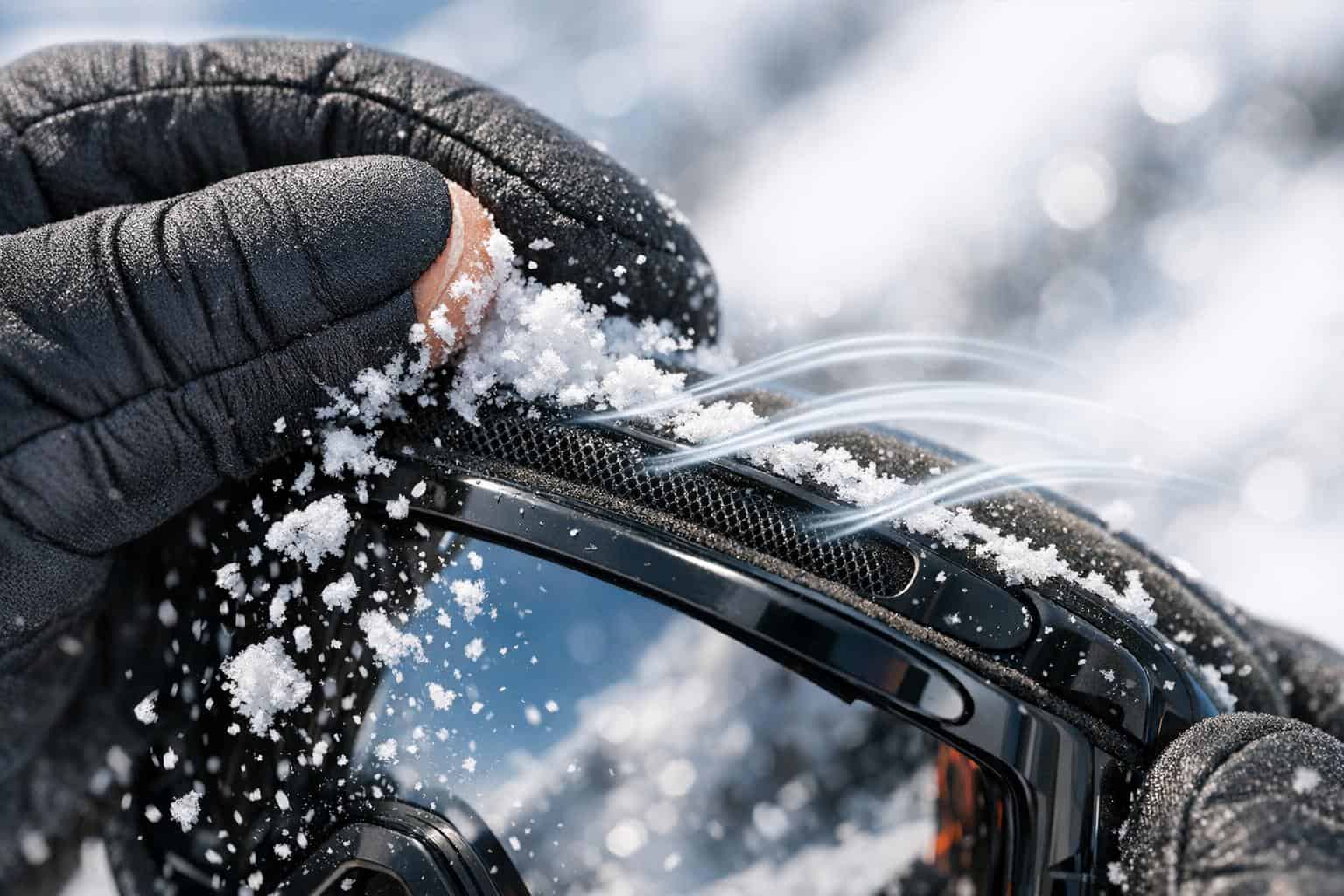
- Clear the vents. The foam strips along the top and bottom of the frame are the ventilation system. Snow packed into them after a fall seals the goggle like a jar. Brush them out.
- Pull the face mask out of the goggle. A gaiter or balaclava tucked under the bottom foam is a pipe that routes every exhale straight up the inside of the lens. Wear it so breath escapes forward or downward, outside the goggle.
- Vent your body heat. If you’re sweating, open the jacket’s pit zips or shed the mid layer. A steaming forehead fogs goggles from inside the frame no matter what the lens coating does. Dialing in your layering is goggle care, oddly enough.
- Never rub the inside of the lens. The anti-fog layer is a thin chemical coating on the inner surface. Wiping it — especially with a glove — scratches it off permanently. If you must, blot gently with a dry lens cloth and let it air-dry.
The habits that prevent it tomorrow
- Keep goggles off your forehead and out from under your helmet brim. The classic lift-line move parks the lens directly over the sweatiest, steamiest part of your body. On breaks, hang them on your arm or set them lens-up, foam-down somewhere dry.
- Dry them every night — out of the bag. Foam holds moisture for days inside a gear bag and seeds the next morning’s fog. Air-dry at room temperature; never on a heater, which cooks foam, lens, and coating.
- Store with the lens cloth, use it only on the outside. Outside wiping is fine. Inside stays untouched.
If fog always starts at the nose, the goggle doesn’t fit your face. A gap at the nose bridge is a dedicated channel feeding your breath into the goggle, and it’s extremely common for women, because most goggle frames are molded around a larger, higher nose bridge. You’re not “a sweaty person” and you’re not doing anything wrong — the frame was shaped for someone else’s face. Several brands now publish low-bridge or small-frame fits with more padding at the nose and a narrower frame. The fix is a frame that seals, not more anti-fog spray.
Check the fit in two minutes
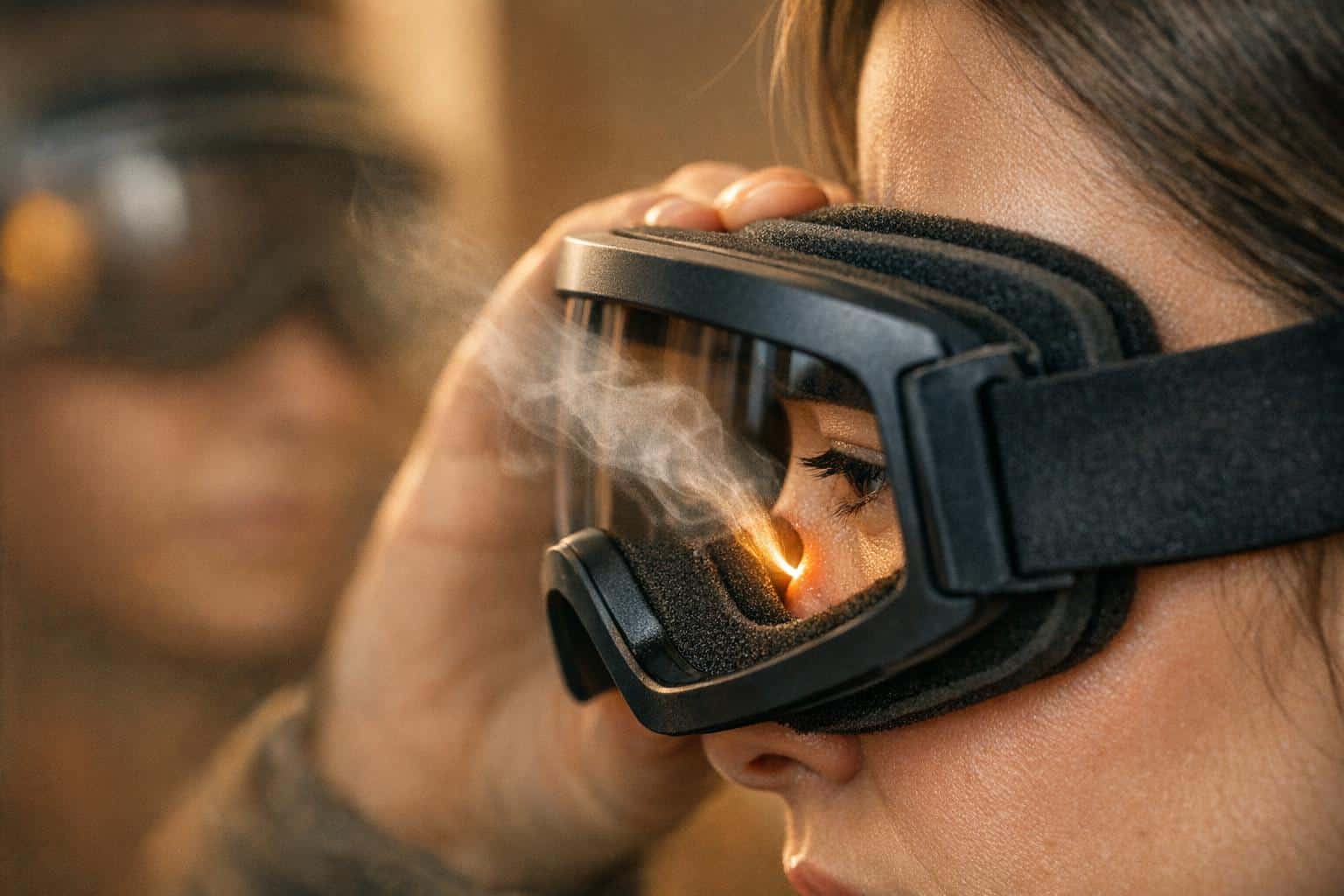
- Press the goggles gently to your face without the strap. The foam should touch everywhere — nose bridge, cheekbones, temples — with no light leaking at the nose.
- Put them on with your helmet. No gap at the forehead between helmet and goggle, and no helmet brim pressing the frame down onto your nose.
- Exhale sharply through your nose. If you feel warm air rise inside the lens, you found your fog.
When it’s actually the goggle
Three honest end-of-life signs: the inner anti-fog coating is wiped off or scratched (fog forms in patches and won’t clear), the frame foam is compressed or crumbling (seals fail everywhere), or you’re riding a single-lens goggle — the double lens is the insulation that keeps the inner surface warm, and modern anti-fog performance mostly lives there. A replacement doesn’t need to be expensive: a current double-lens goggle that seals on your face beats a premium one that gaps at the nose. Budget options that do this are in our budget snow goggles roundup.
Common questions
Does anti-fog spray work?
As a stopgap on an aging lens, somewhat. It can’t outperform an intact factory coating, and it does nothing about a nose-bridge gap or blocked vents. Fix airflow and fit first; treat spray as a last-season extension, not a solution.
Why do my goggles fog on the lift but clear when I ride?
Riding forces air through the frame vents; sitting still doesn’t. That’s normal physics, not failure. If they fog while riding, look at the mask, the vents, or the fit.
Can I ride with fogged goggles until they clear?
Flat-light fog is a visibility hazard, not just an annoyance. Stop, air them out properly once, and fix the source — repeated fog-and-smear cycles are also how coatings get ruined.
Keep your kit working together
- Breath routing starts with the right layering and face-covering setup
- Replacing them? Start with the budget goggles roundup and the full beginner gear guide
Sources
- REI: How to Keep Your Goggles from Fogging Up
- evo: How to Prevent Goggle Fog
- Smith: I/O MAG S Low Bridge Fit (low-bridge frames as a published product feature)
The Gear Lady evaluates gear using the Ergonomic Matrix — a published framework applied to manufacturer specs, standards ratings, and aggregated owner reports from women who share their measurements. We don’t field-test every product we cover. We earn commission on some links — as an Amazon Associate, The Gear Lady earns from qualifying purchases — and it never affects a score.
