
Best Women’s Snowboard Gear for Beginners 2026
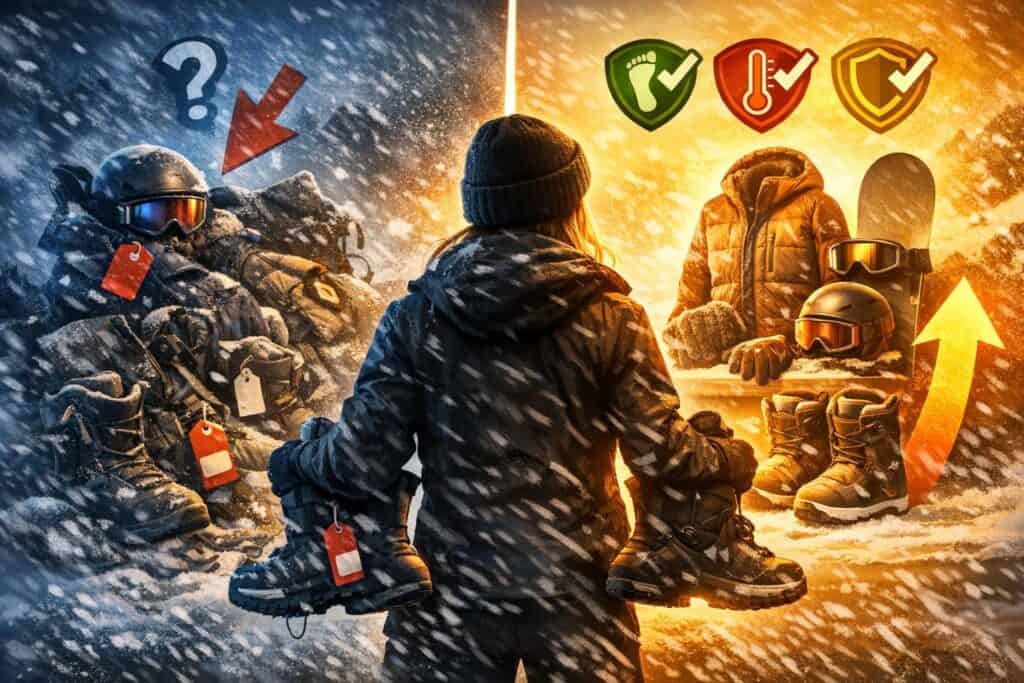
Beginner Snowboard Gear That Keeps You Warm, Mobile, and Out of the Rental-Line Regret Spiral
You are a week out from the trip. The weather app says freezing. The rental shop website has plenty of packages but almost no answers about fit. You have twenty tabs open, a cart full of maybes, and a quiet fear that the best women’s snowboard gear for beginners is going to cost more than the actual vacation.
The real goal is not to look like you have been riding for years. It is simpler and more important: stay warm, protected, mobile, and comfortable enough to keep learning after the first fall, the first lift-line wait, and the first cold chair ride.
A beginner named Maya buys a beautiful board before her first weekend because it feels like the main thing. By lunch, her toes are numb, her rented boots are crushing her arches, her gloves are wet, and she is wondering if snowboarding just is not for her. Her board is not the problem. Her buying order is.
The smarter path is to build around the gear that controls your day: fit, warmth, safety, and how often you will actually ride.
The core promise: you do not need a perfect full setup to start snowboarding. You need the right first purchases in the right order.
Quick verdict: most beginner women should prioritize comfortable boots, waterproof warm outerwear, gloves or mittens, helmet and goggles, and breathable layers before buying a board and bindings.
Decision shortcut: buy first for comfort and safety, compare carefully for ride-control gear, and rent or wait on anything you are not sure you will use repeatedly.
Best for
- Women planning a first or early-season snowboard trip who want to avoid wasting money
- Beginners deciding what to buy now versus rent for the first trip
- Riders who want women-specific fit signals for boots, outerwear, gloves, helmets, and goggles
- Budget-conscious shoppers comparing established snowboard brands such as Burton without buying by logo alone
Not ideal for
- Advanced riders looking for aggressive freeride or park-specific setups
- Shoppers who already know their preferred stance, flex, boot model, and board profile
- Anyone looking for one universal product list that ignores weather, fit, trip length, and riding frequency
Think of this guide like building a first-aid kit for your snowboard day. You handle the pieces that prevent the biggest problems first. Then you upgrade performance.
If you already know you want to compare current snowboard-specific options, start by checking current prices on beginner-friendly gear. If you are still learning what each category does, open the deeper beginner snowboard gear guide and use this page as your buying-order map.
Start Here: What Beginner Women Should Buy First
Your first snowboard purchases should solve the problems most likely to end your day early: cold, pain, bad visibility, poor protection, and restricted movement. That means the board is not automatically first, even though it is the most visible piece of gear.
Use this four-part filter:
- Warmth: Will this keep you comfortable in snow, wind, lift lines, and falls?
- Fit: Will it stay in place without pinching, sliding, bunching, or cutting off circulation?
- Safety: Does it protect your head, eyes, hands, and body from common beginner risks?
- Frequency: Will you use it enough to justify owning instead of renting?
For most first-season riders, the priority order looks like this:
- Boots: buy sooner if rental boots hurt or you are riding more than once
- Gloves or mittens: buy early because cold hands make everything worse
- Helmet and goggles: buy or rent, but do not treat them as optional
- Jacket and pants or bibs: prioritize waterproofing, warmth, and movement
- Base layers and socks: small purchase, big comfort effect
- Bindings and board: compare carefully, but rent first if you are not sure you will keep riding
Burton is worth comparing because it is an established snowboard-specific brand with gear across hardgoods and outerwear. But the brand still has to pass the same test as everything else: does it fit, keep you warm, protect you, match your riding frequency, and make sense for your budget?
A simple example: Jenna is taking one lesson and riding one weekend. She buys waterproof mittens, non-cotton base layers, good socks, and goggles that fit her face. She rents boots, board, bindings, and helmet from the mountain. Her friend buys a discounted full setup online but guesses on boot size and jacket mobility. Jenna spends less and has the better learning day because her basics do their job.
The objection is understandable: if snowboarding is about the board, should the board be the first purchase? Not always. A board helps you ride, but comfort gear helps you stay out long enough to learn how to ride.
The Beginner Gear Mistake That Gets Expensive Fast
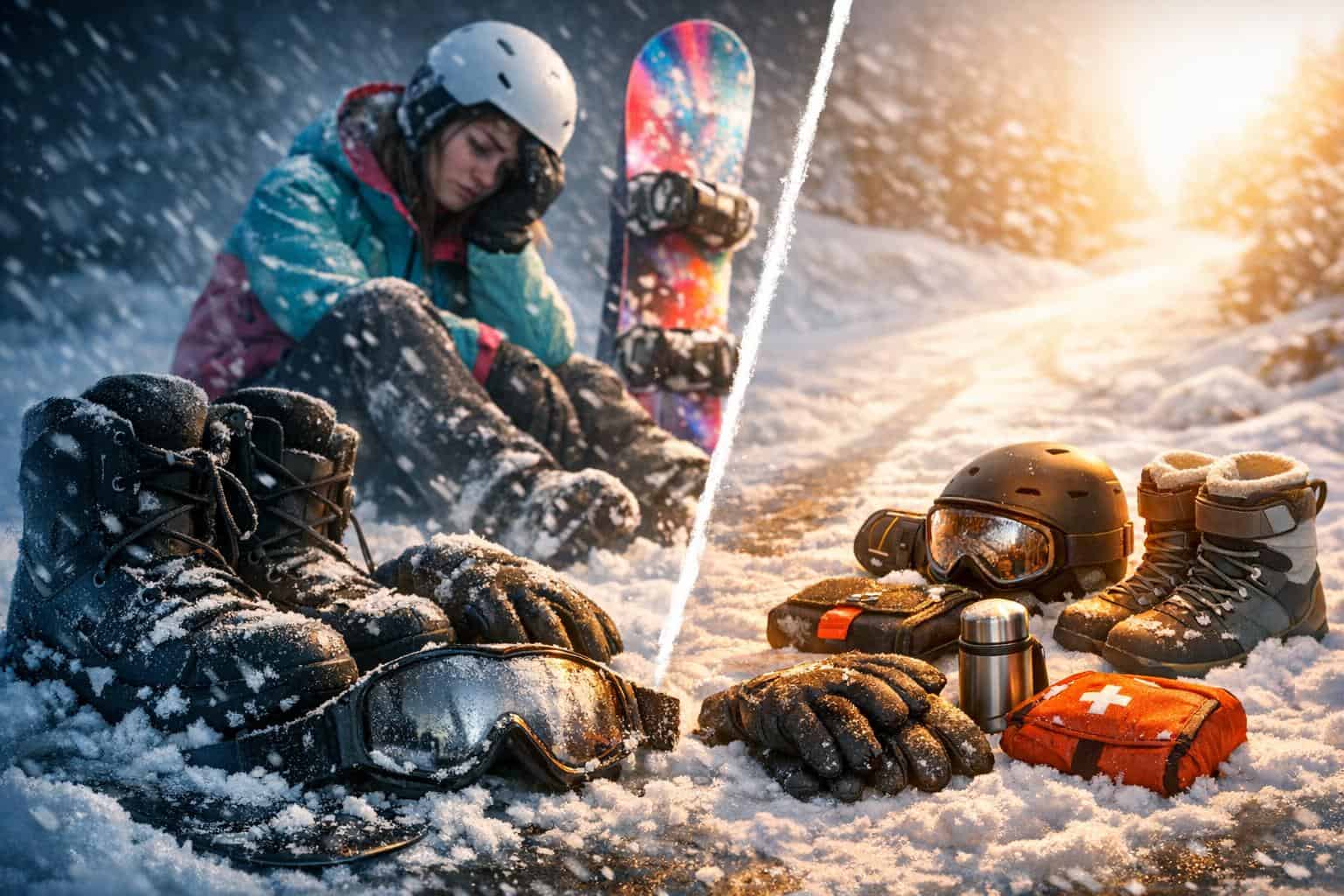
The most expensive beginner mistake is not buying cheaper gear. It is buying in the wrong order.
Beginners often over-focus on the gear that looks impressive in photos: the board, the jacket color, the matching setup, the dramatic mountain-ready outfit. But the day is usually won or lost by the boring things: boots that do not crush your feet, gloves that stay dry, goggles that do not fog instantly, and layers that let you move without sweating through everything.
Looking prepared and being prepared are not the same thing.
Cold hands can make you quit before your lesson really clicks. Painful boots can make every toe-side turn feel like punishment. Fogged goggles can make a gentle beginner run feel unpredictable. Bad layering can leave you sweaty on the first run and chilled on the next chairlift.
Think of it like taking a winter road trip. Buying premium tires matters eventually, but forgetting a warm coat, clear windshield, and gloves makes the trip miserable before performance ever matters.
Here is a realistic mountain-day split. Two beginners take the same morning lesson. One has a rented board, comfortable boots, dry mittens, clear goggles, and warm layers. The other owns a flashy board but has thin gloves and a jacket that rides up every time she straps in. By noon, the second rider is cold, annoyed, and blaming herself. The first rider is still falling, but she is warm enough to laugh, reset, and try again.
That is the hidden cost: bad gear order slows progression because your brain starts solving discomfort instead of learning balance and edge control.
The counterargument is that beginner gear can feel temporary, so buying anything sounds wasteful. Fair. But the fix is not to buy nothing. The fix is to buy the items that transfer across trips and skill levels: gloves, layers, goggles, helmet if you prefer owning your own, and boots once you are confident you will ride again.
For a deeper anti-overbuying walkthrough, use the beginner snowboard gear guide alongside this shortlist.
Quick Picks by Gear Category
This is the cart-building part. Treat each category like a role on a team. Boots control comfort and board feel. Outerwear controls endurance. Helmet and goggles control safety and visibility. Layers regulate temperature. Board and bindings matter, but they should match how often you ride and what you learn about your preferences.
Boots: best first upgrade for repeat riders
Buy, rent, or delay: buy if you will ride multiple days or rental boots have hurt you before. Rent if it is truly a one-time trial.
Look for secure heel hold, toes that lightly touch without being crushed, no sharp pressure points, and enough warmth without sloppy extra space. Beginner-friendly boots are usually more forgiving than stiff aggressive boots, but fit matters more than the spec sheet.
Avoid choosing boots because they are the prettiest pair left on sale. A bargain boot that makes your feet go numb is not a bargain.
Mini scenario: Erin rents boots for her first day and survives, but by her third trip she notices the same problem every time: her heel lifts when she tries to turn, then her toes jam forward when she stops. She finally buys boots after trying on several pairs and choosing the one that holds her heel without crushing her instep. Her turns do not magically become perfect, but she stops fighting the boot and starts feeling what the board is doing.
Jacket: best endurance buy for cold or wet trips
Buy, rent, or delay: buy if you will be outside for full days, especially in wet snow, wind, or lift-line weather.
Prioritize weather protection, warmth strategy, room for layers, and unrestricted arm movement. A snowboard jacket should cover you when you bend, sit, reach, and fall. Insulation can help in colder climates, while shell-style jackets can work if you layer correctly.
Avoid a jacket that feels cute standing still but tight when you crouch or reach for bindings.
Pants or bibs: best protection against snow sneaking in
Buy, rent, or delay: buy if you hate being wet or will ride more than once. Bibs can be especially beginner-friendly because they reduce snow gaps when you sit or fall.
Look for movement at the hips and knees, enough waist comfort for base layers, and coverage when bending. Pants that restrict your squat will annoy you every time you strap in.
Objection: snow pants feel like something you can borrow once. You can, but test mobility before the trip. Borrowed ski pants that are too tight can make snowboarding harder than it needs to be.
Gloves or mittens: best small purchase with huge comfort payoff
Buy, rent, or delay: buy early. This is one of the easiest comfort upgrades to justify.
Mittens are often warmer; gloves offer more dexterity. Beginners spend a lot of time touching snow, pushing up, adjusting bindings, and waiting in the cold. Waterproofing and cuff coverage matter.
Avoid thin fashion gloves, knit gloves, or anything that soaks through quickly.
Helmet: best safety non-negotiable
Buy, rent, or delay: wear one every time. Buy if you want your own fit and hygiene; rent if the shop provides a proper fit.
A helmet should sit level, feel secure, and work with your goggles. It should not wobble, pinch, or create a forehead gap with your goggles.
The false belief is that helmets are only for speed or advanced terrain. Beginners fall often, sometimes awkwardly, and usually while learning how to stop, turn, unload from the lift, or navigate crowded beginner areas.
Goggles: best visibility and confidence upgrade
Buy, rent, or delay: buy if you want consistent fit and visibility. Rent or borrow carefully only if compatibility is good.
Look for comfort around the nose, seal around the face, lens suitability for the day, and helmet compatibility. You do not need to memorize lens technology to know that seeing clearly matters.
Avoid picking goggles only by frame color or discount bin luck.
Base layers and socks: best low-drama comfort foundation
Buy, rent, or delay: buy. Do not snowboard in cotton if you can avoid it.
Base layers should manage moisture and move with you. Snowboard socks should be warm without being bulky. Thick socks can create pressure inside boots and make your feet colder by restricting circulation.
This is like choosing the right foundation under makeup or the right socks for hiking. Nobody sees it, but the whole day depends on it.
Bindings: best compare-carefully category
Buy, rent, or delay: rent with the board for a first trip. Buy when you know you will ride enough and have a boot you like.
Bindings should match your boot size, feel secure, and offer a flex that does not overpower a beginner. Adjustability matters because stance and comfort can change as you learn.
Burton and other established snowboard brands are useful to compare here, but do not buy bindings in isolation. They need to work with your boots, board, and riding goals.
Beginner board: best rent-first unless commitment is clear
Buy, rent, or delay: rent first if you are still testing the sport. Buy if you are committing to multiple trips or a season.
Beginner-friendly boards are typically more forgiving and less punishing than aggressive advanced boards. The right board depends on height, weight, boot size, stance, snow conditions, and how you want to progress.
A weekend rider and a season-pass rider should not build the same cart. The weekend rider should protect comfort and safety first. The season-pass rider may be ready to compare board profiles, binding flex, and boot compatibility sooner.
If you are comparing established snowboard gear brands, this is a natural moment to read a balanced Burton snowboard gear review before assuming any one brand is automatically right.
Compare the Essentials Before You Spend
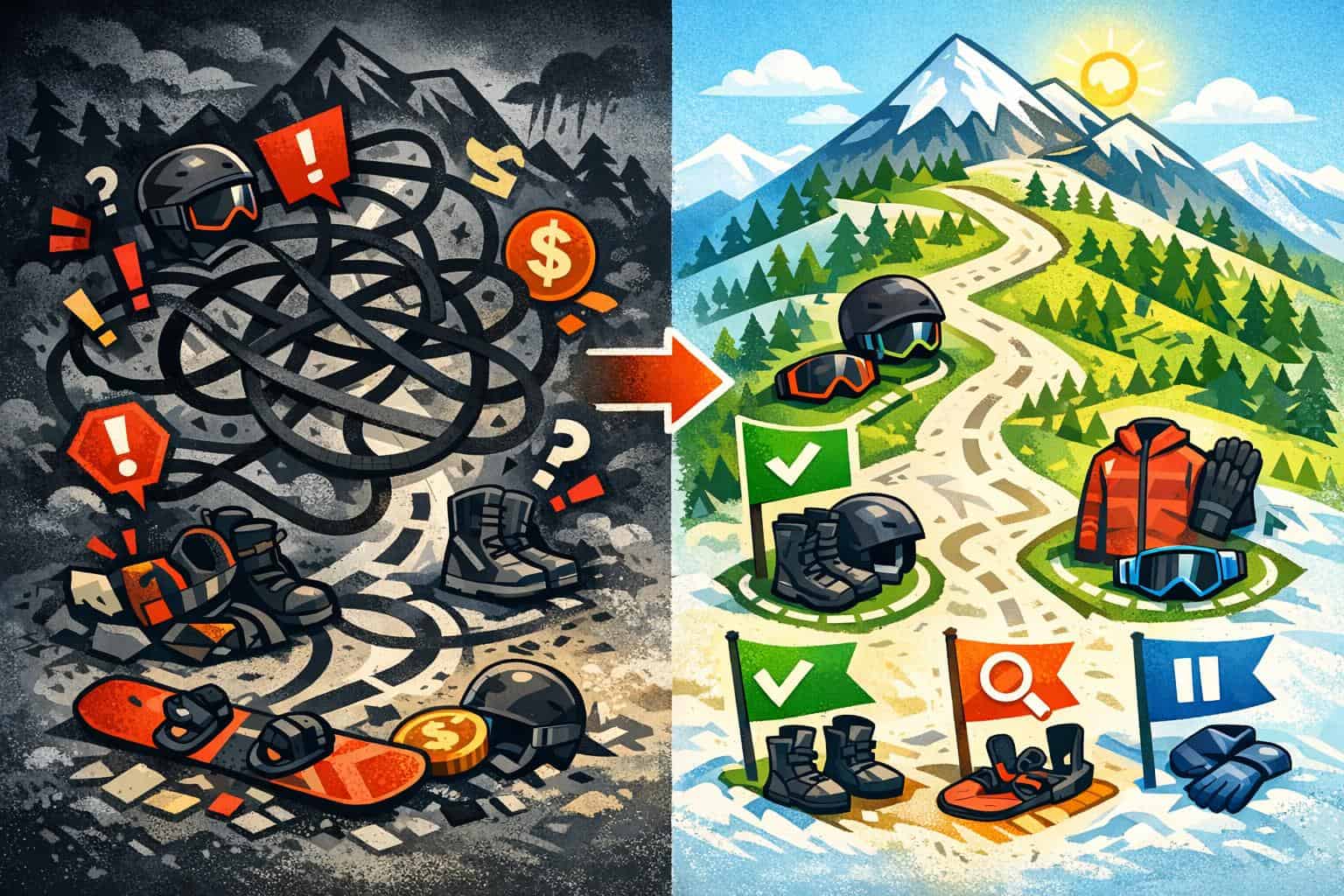
A good gear list should not pressure you to buy the highest-rated item in every category. That feels safe, but it can waste money fast. A smarter comparison table works like a pre-trip packing dashboard: it tells you what can make or break the day, what is fit-sensitive, and what can wait.
| Gear category | Beginner importance | Fit risk | Warmth impact | Safety impact | Buy, rent, or wait | Budget priority |
|---|---|---|---|---|---|---|
| Boots | Very high | Very high | Medium | Medium | Buy for repeat riding, rent for first trial | High if riding again |
| Gloves or mittens | Very high | Medium | Very high | Medium | Buy early | High |
| Helmet | Very high | High | Low | Very high | Buy or rent, but always wear | High |
| Goggles | High | Medium | Medium | High visibility impact | Buy if fit matters, rent carefully | Medium-high |
| Jacket | High | Medium | Very high | Medium | Buy for full-day trips | Medium-high |
| Pants or bibs | High | Medium | High | Medium | Buy or borrow only if mobility works | Medium-high |
| Base layers and socks | High | Medium | High | Low | Buy | Medium |
| Bindings | Medium | Medium | Low | Medium control impact | Rent with board first | Medium later |
| Board | Medium-high | Medium | Low | Medium control impact | Rent first unless committed | Lower for first trial, higher for season |
For a three-day trip in wet snow, outerwear, gloves, goggles, and layers move up the priority list. For a short indoor lesson, rental hardgoods may be enough while you focus on socks, gloves, and comfortable movement. For a season commitment, boots and eventually a board-binding setup deserve more careful comparison.
The advanced tradeoff is progression. If your goal is to ride all season, owning boots sooner can support consistency because you are not adjusting to a different rental feel every time. But if you are still unsure whether snowboarding is your sport, renting a board and bindings is not a lack of commitment. It is smart sequencing.
What most people get wrong is treating this like a one-cart problem. It is actually a timing problem. Buy the gear that removes the biggest risk from your next trip, then upgrade the pieces that will matter more once your riding preferences are clearer.
Women-Specific Fit Signals That Matter on the Mountain
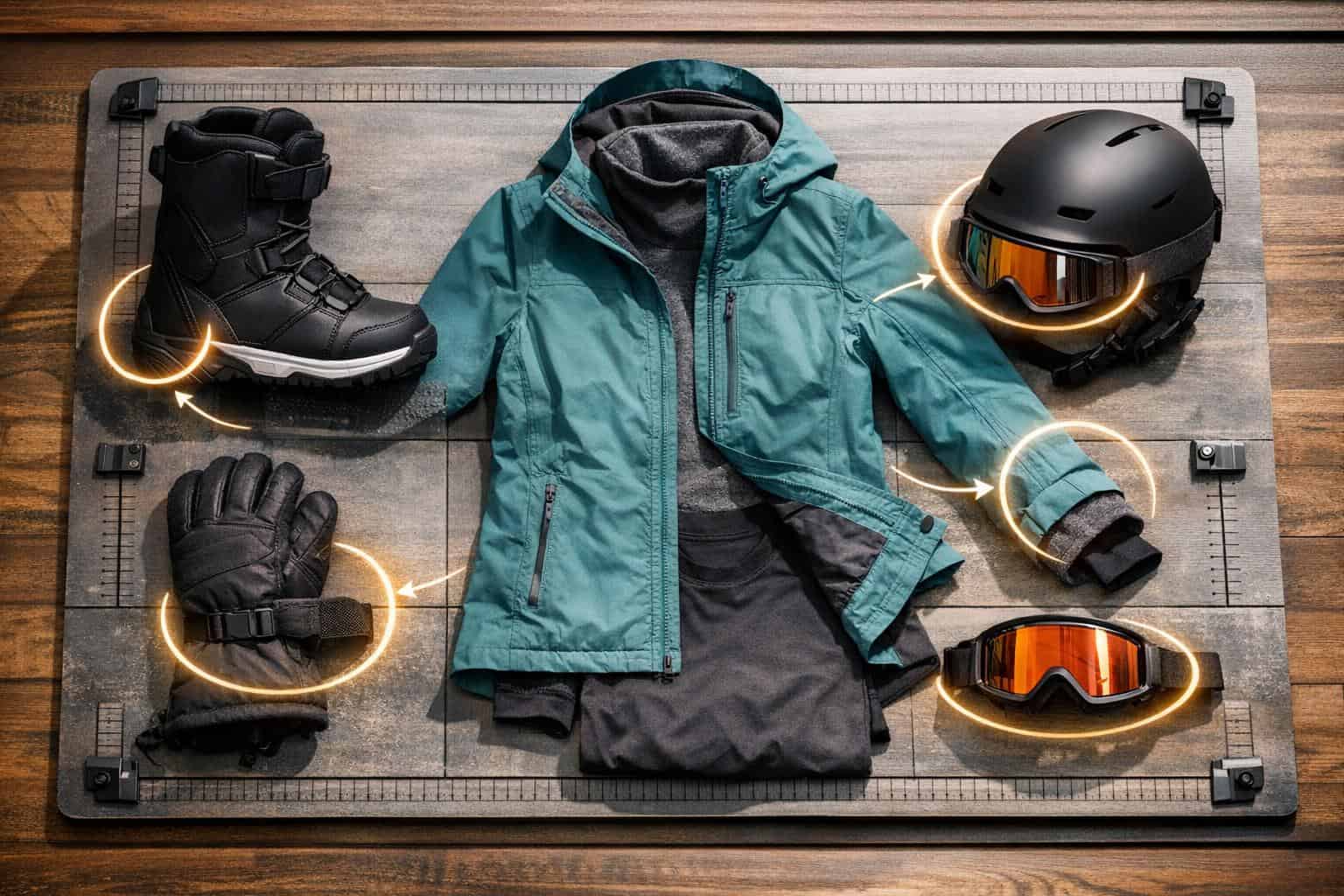
Women-specific snowboard gear is not automatically better, and unisex gear is not automatically wrong. The useful question is whether the gear fits your body and your movement on snow.
For boots, pay attention to real sensations:
- Heel hold: your heel should not lift dramatically when you flex forward
- Toe room: toes can lightly touch the front, but should not be crushed
- Pressure points: no sharp pain on the top of the foot, ankle, calf, or toes
- Warmth without slop: extra room may feel cozy in the shop but can reduce control
For outerwear, test movement instead of just mirror fit:
- Can you squat, reach, and twist?
- Does the jacket cover your lower back when you bend?
- Do sleeves stay long enough when your arms are forward?
- Is there room for base layers without feeling stuffed?
- Do pants or bibs stay comfortable around the waist and hips when you sit?
For gloves or mittens, check cuff coverage and wrist closure. Snow loves gaps. For helmets and goggles, check that the helmet sits level and the goggles meet the helmet without a big cold forehead gap. For base layers, avoid bunching, scratchy seams, and tight waistbands that become annoying after hours of bending and standing back up.
Think hiking boots and rain gear. If it rubs, leaks, or restricts motion, the whole trip suffers no matter how good the brand name looks.
Mini scenario: Priya tries on two pairs of boots. One is discounted and feels soft in the toe box, but her heel lifts when she flexes. The other feels snugger at first but holds her heel and does not pinch. She chooses heel hold because she plans to take lessons. On the mountain, she still falls, but her feet stay connected to the board instead of sliding inside the boot every time she tries to turn.
The objection is that women-specific gear can sound like marketing. Sometimes it is. But fit is not vanity. It affects fatigue, warmth, confidence, and control. The label matters less than the evidence: no pinching, no cold gaps, no restricted movement, no sloppy fit.
Where Burton Fits in a Beginner Women’s Gear Shortlist
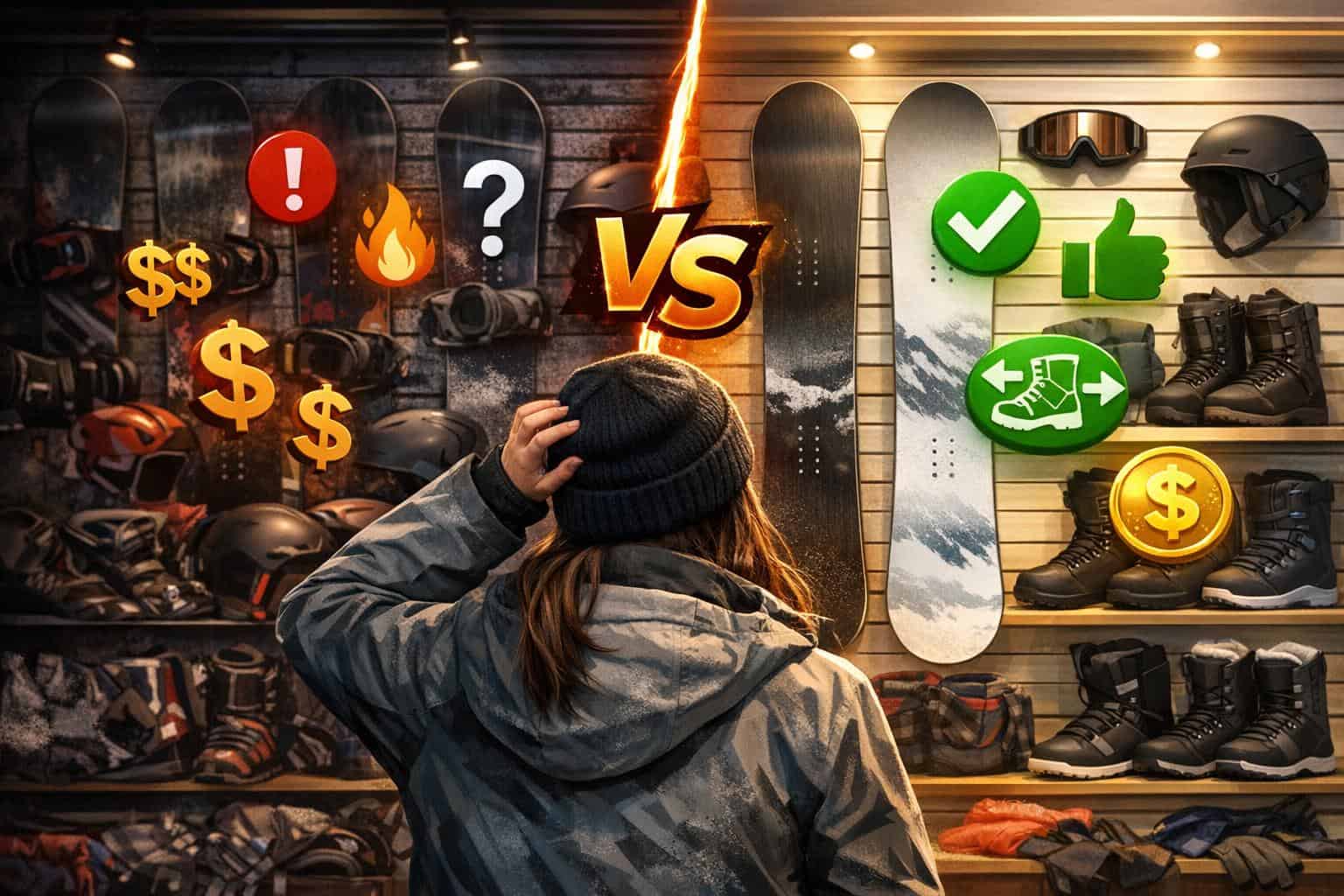
Burton belongs in the conversation because it is a recognized snowboard-specific brand with options across boards, bindings, boots, outerwear, and accessories. That can make comparison easier for beginners who feel lost in a sea of unfamiliar names.
But brand recognition is a starting point, not a permission slip to buy everything on the shelf.
Use the same filter you would use for any brand:
- Does the boot fit your foot without heel lift or pressure points?
- Does the jacket or pant support your weather and layering needs?
- Does the helmet-goggle setup fit securely and comfortably?
- Do the bindings match your boots and beginner control needs?
- Does the board make sense for your size, riding frequency, and progression goals?
- Does the purchase fit your budget after the must-have comfort and safety items are covered?
A familiar gear brand is like a familiar grocery store. It can make shopping less intimidating, and you may trust the aisle layout, but you still should not throw everything in the cart without checking what you actually need for dinner.
Mini scenario: Lauren sees a Burton setup and likes the simplicity of choosing within one established snowboard brand. Instead of buying the full kit immediately, she tries boots for heel hold, compares outerwear for movement, and rents a board for her first weekend. After two trips, she knows she wants to keep riding and returns to compare board and binding options with better context. The brand helped her start, but the checklist protected her budget.
The big-brand objection cuts both ways. Some shoppers assume big brands are always overpriced. Others assume big brands are always safer. Neither is a complete buying strategy. A well-known brand can simplify research, but the right beginner pick still depends on fit, warmth, safety, frequency, and value.
If Burton is on your shortlist, read the full Burton snowboard gear review for a deeper brand-specific look before making it your default.
Buy, Rent, or Wait: The Budget Decision Map
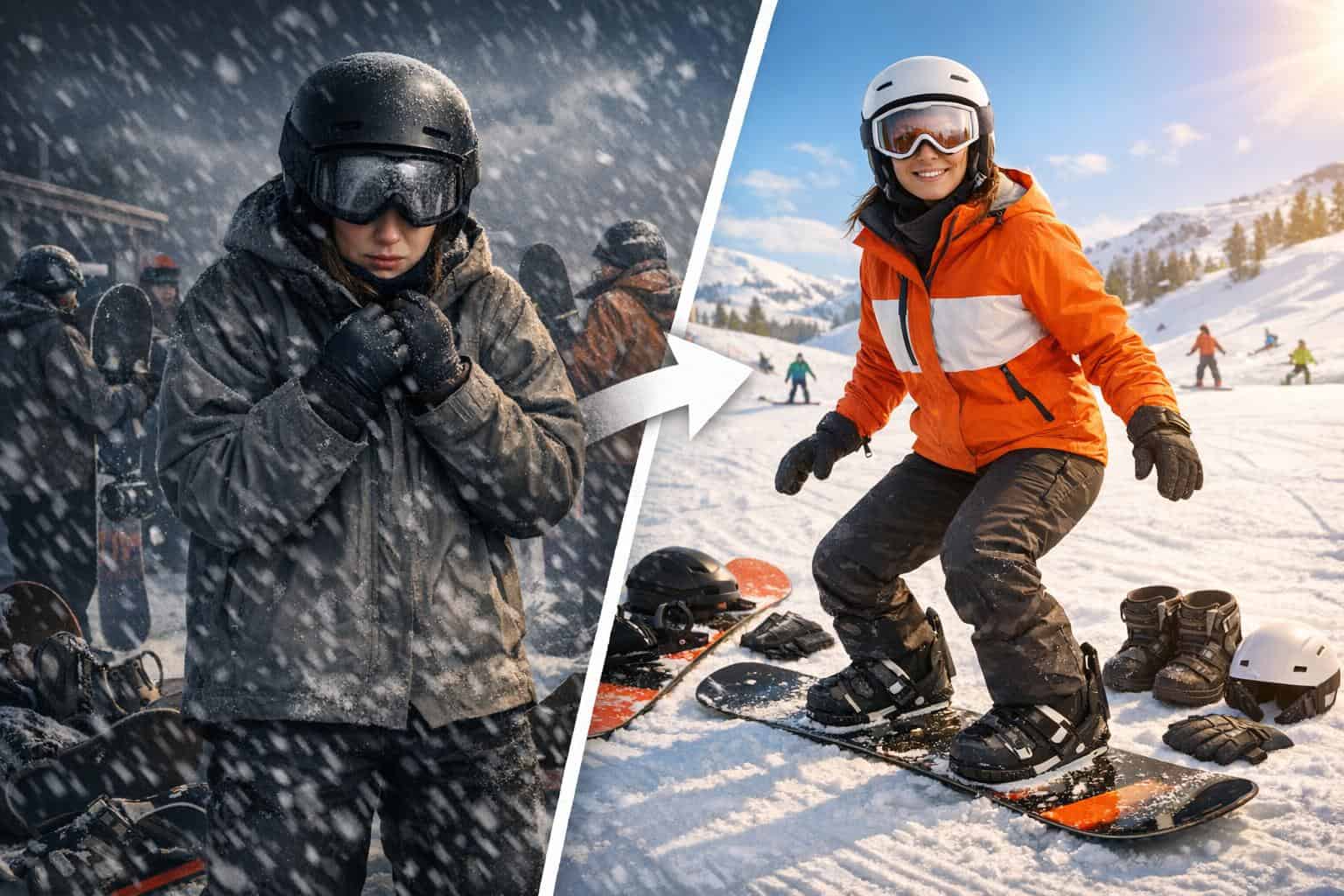
This is where you give yourself permission to be practical. You are not under-equipped because you rent certain items. You are under-equipped only if your setup leaves you cold, unsafe, immobile, or unable to learn.
If you are riding once
Prioritize:
- Waterproof gloves or mittens
- Warm non-cotton base layers
- Good snowboard socks
- Goggles if rentals or borrowing are uncertain
- Helmet if not included or if you want your own fit
- Weather-appropriate jacket and pants or bibs
Rent:
- Board
- Bindings
- Boots, unless you already know rental boots are a problem
Wait on:
- Owning a full board setup
- Specialty accessories you do not understand yet
- Expensive performance upgrades
If you are taking multiple trips
Prioritize boots sooner, especially if rental fit has been inconsistent. Then refine gloves, goggles, helmet, and outerwear. Your comfort gear will follow you from trip to trip, even if you keep renting hardgoods.
If you are committing to a season
Now board and binding comparisons become more relevant. You will have enough time to notice whether you prefer a softer forgiving ride, how your stance feels, whether your boots match your bindings well, and what type of terrain you enjoy.
This is like cooking. Buy the knife you use every day before buying the specialty appliance. In snowboarding, the everyday knife is the comfort and safety gear that touches every run.
Mini scenario: Two friends plan differently. A one-weekend rider buys mittens, base layers, socks, and goggles, then rents the board package. She spends carefully and has what she needs. A season-pass rider buys boots after trying several pairs, upgrades outerwear, and then compares board and binding setups once she has a better sense of her riding. Both are making smart decisions because each setup matches actual use.
The fear is that renting makes you look unprepared. It does not. Plenty of beginners rent hardgoods while owning personal comfort items. That combination often makes more sense than buying a board before you know your size, stance, flex preference, or commitment level.
If you want the full setup explanation before deciding, keep the beginner snowboard gear guide open while you shop.
Final Recommendation: Build the Setup That Helps You Actually Learn
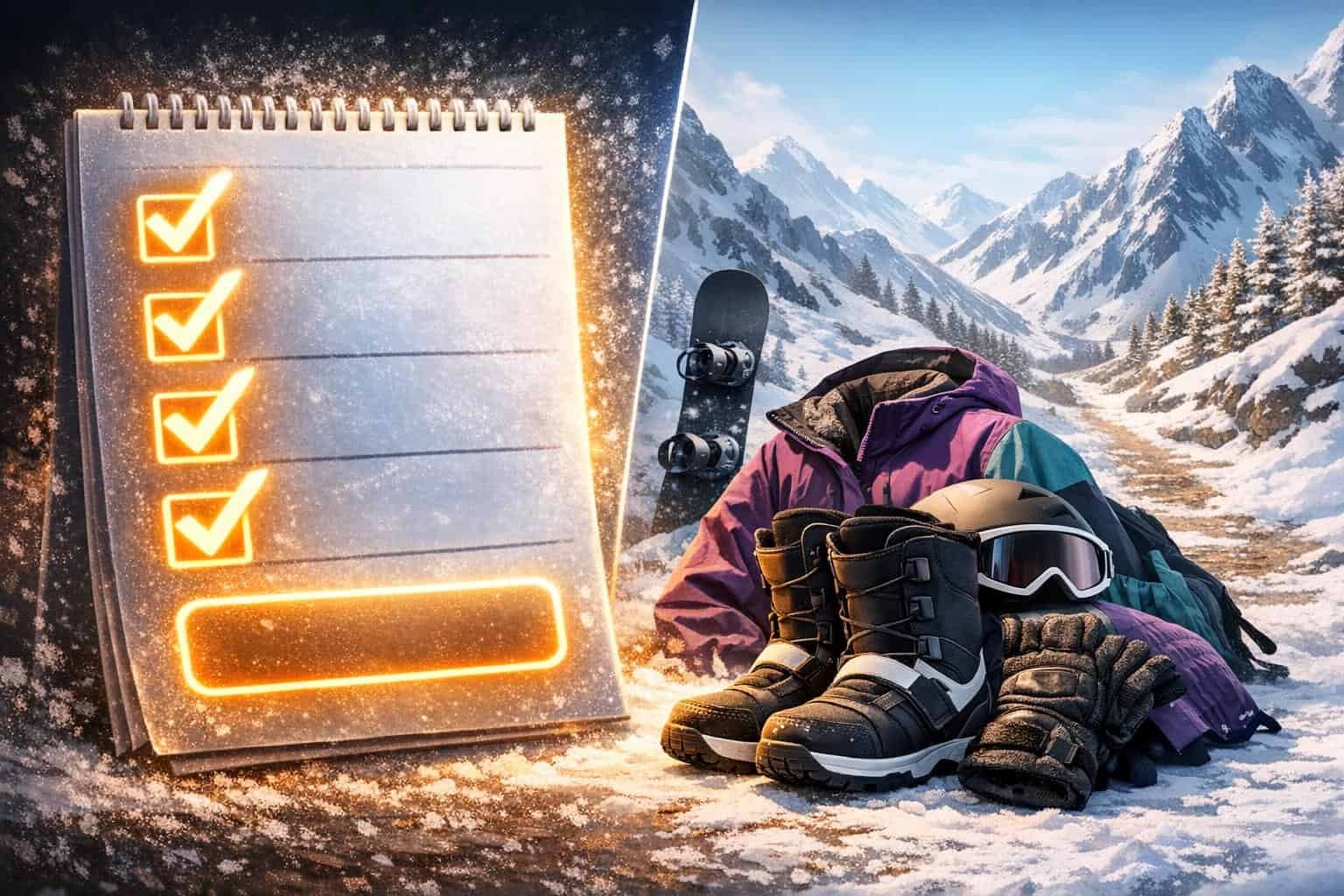
The best beginner setup is not the most impressive one. It is the one that keeps you warm enough to stay out, comfortable enough to focus, protected enough to relax, and mobile enough to keep trying.
Use the same framework all the way through:
- Warmth: what prevents cold hands, wet layers, and chairlift misery?
- Fit: what stops pinching, sliding, bunching, and pressure points?
- Safety: what protects your head, eyes, and hands while you learn?
- Frequency: what deserves ownership based on how often you will ride?
Your next step is simple: choose the gear category that removes the biggest risk from your next trip.
If you are worried about being cold, start with gloves, layers, and outerwear. If you are worried about pain, compare boots. If you are worried about visibility and protection, sort out helmet and goggles. If you are only riding once, rent the board and bindings without guilt. If you are committing to the season, compare hardgoods after you understand your fit and riding preferences.
Deals can make you feel like waiting is dangerous, but a discount on the wrong item is still wasted money. Compare current prices, but do not let price alone outrank fit, warmth, safety, and frequency.
For a brand-specific next step, read the Burton snowboard gear review. For a full category-by-category foundation, use the beginner snowboard gear guide. Then check current prices on the pieces that actually solve your next-trip problem.
The transformation is not just a better cart. It is showing up on the mountain with fewer doubts, fewer preventable comfort problems, and a setup that supports the thing you came to do: learn.
The Gear Lady evaluates gear using the Ergonomic Matrix — a published framework applied to manufacturer specs, standards ratings, and aggregated owner reports from women who share their measurements. We don’t field-test every product we cover. We earn commission on some links — as an Amazon Associate, The Gear Lady earns from qualifying purchases — and it never affects a score.